


Vet Surgical Instruments
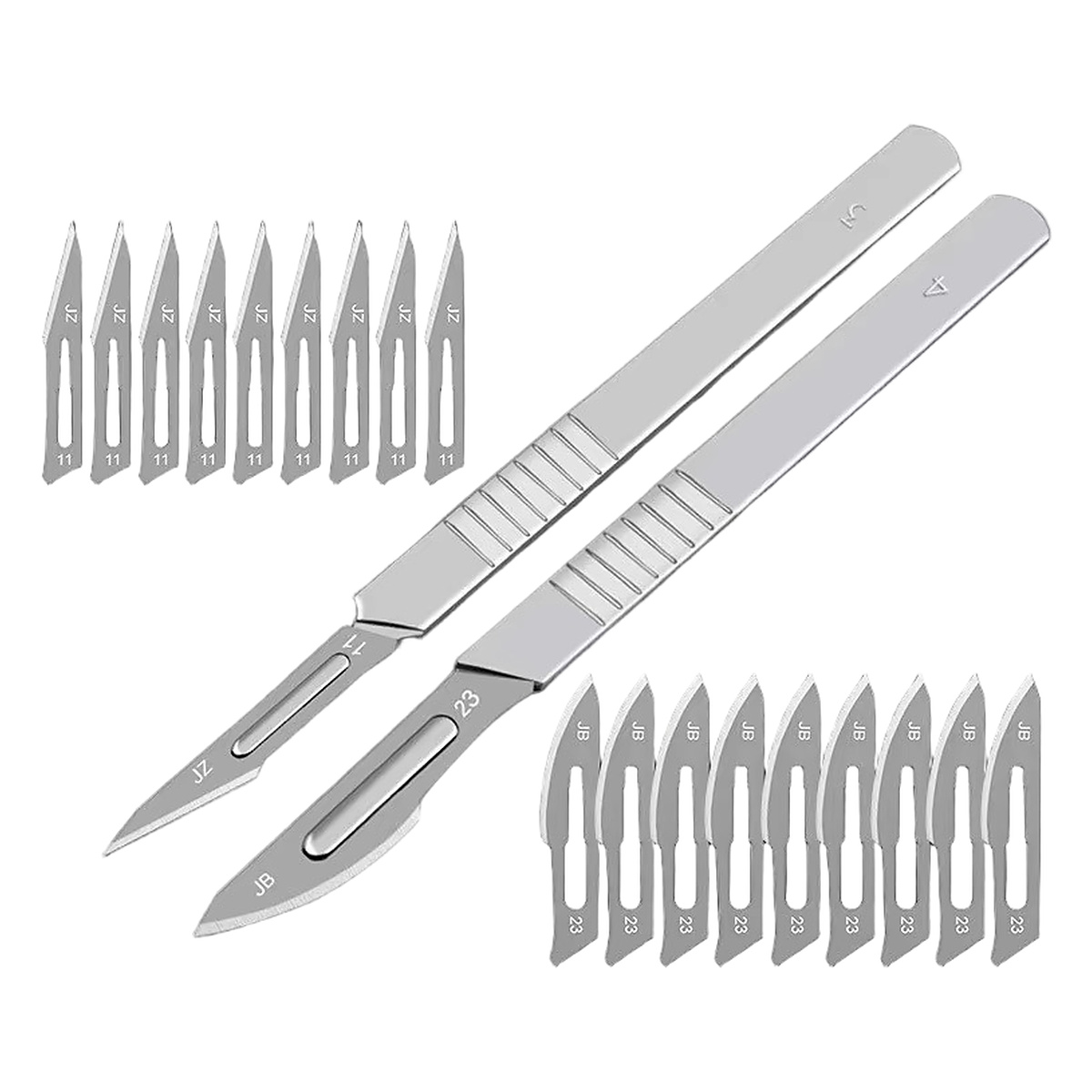
Surgical Blades and Handles
- Profiles: 10, 11, 15, 23
- Quantity: 8 of each
- Handles: 2 stainless
- Use: single use blades
- Product description: Surgical blade set with eight each of No. 10, 11, 15 and 23 carbon-steel blades and two stainless handles. Individually wrapped, single use.
Blades are the cheapest thing in the theatre and the most often reused past the point where they cut. A blade that has been through one incision and a session in the sharps bin is done; a blade that has been left on the trolley and wiped is a blade with a rolled edge that tears tissue instead of dividing it, and a torn wound edge heals slower and scars wider than a cut one.
This is a blade and handle set: eight each of the four profiles used most in small animal surgery, with two handles. The blades are carbon-steel sharp, individually wrapped, and fit the standard handle by sliding onto the long track and clicking into the notch at the end.
The four profiles
No. 10 is the general-purpose blade: a curved cutting edge about 40 mm long, used for skin incisions and for any long cut through muscle or fascia where a single pass is wanted.
No. 11 is a straight, pointed blade. It is for a stab incision - a drain site, a catheter port, an arthrocentesis approach - where the point does the work and the cut has to be short and controlled. It is also the blade people cut themselves with, because the point is exposed and the handle is short.
No. 15 is a small curved blade, the same shape as a No. 10 at roughly half the length. It is the blade for a cat or a toy breed, for a fine incision on a paw or an eyelid, and for anything where a No. 10 would take more than intended.
No. 23 is a larger curved blade for a long incision on a large patient, or for a cut through thick skin where a No. 10 dulls halfway.
Handling
Mount the blade with a needle holder, gripping the blade near its centre and sliding it along the track until it seats. Never hold the blade by the cutting edge, and never mount it with fingers - the commonest hand injury in a veterinary theatre is a blade mounted by hand. Remove it with a blade remover or with the needle holder, and put it straight into the sharps container rather than onto the trolley.
| Parameter | Value |
|---|---|
| Blade profiles | No. 10, 11, 15, 23 |
| Quantity | 8 blades of each profile |
| Handles | 2 stainless handles, standard blade track |
| Material | Carbon steel blade, stainless handle |
| Packing | Individually wrapped blades |
| Use | Single use blade; handle reusable, autoclavable |
| Application | Skin and soft tissue incision, small animal surgery |
Buying
Sets are supplied with all four profiles, or as boxes of a single profile for a practice that uses one shape almost exclusively. Tell us which you go through fastest and we will quote that as the bulk line and the rest as a small mixed pack. Handles are available separately, and a handle with a cracked track should be replaced rather than used - a blade that rocks on the track cuts at an angle you did not choose.
Related Products
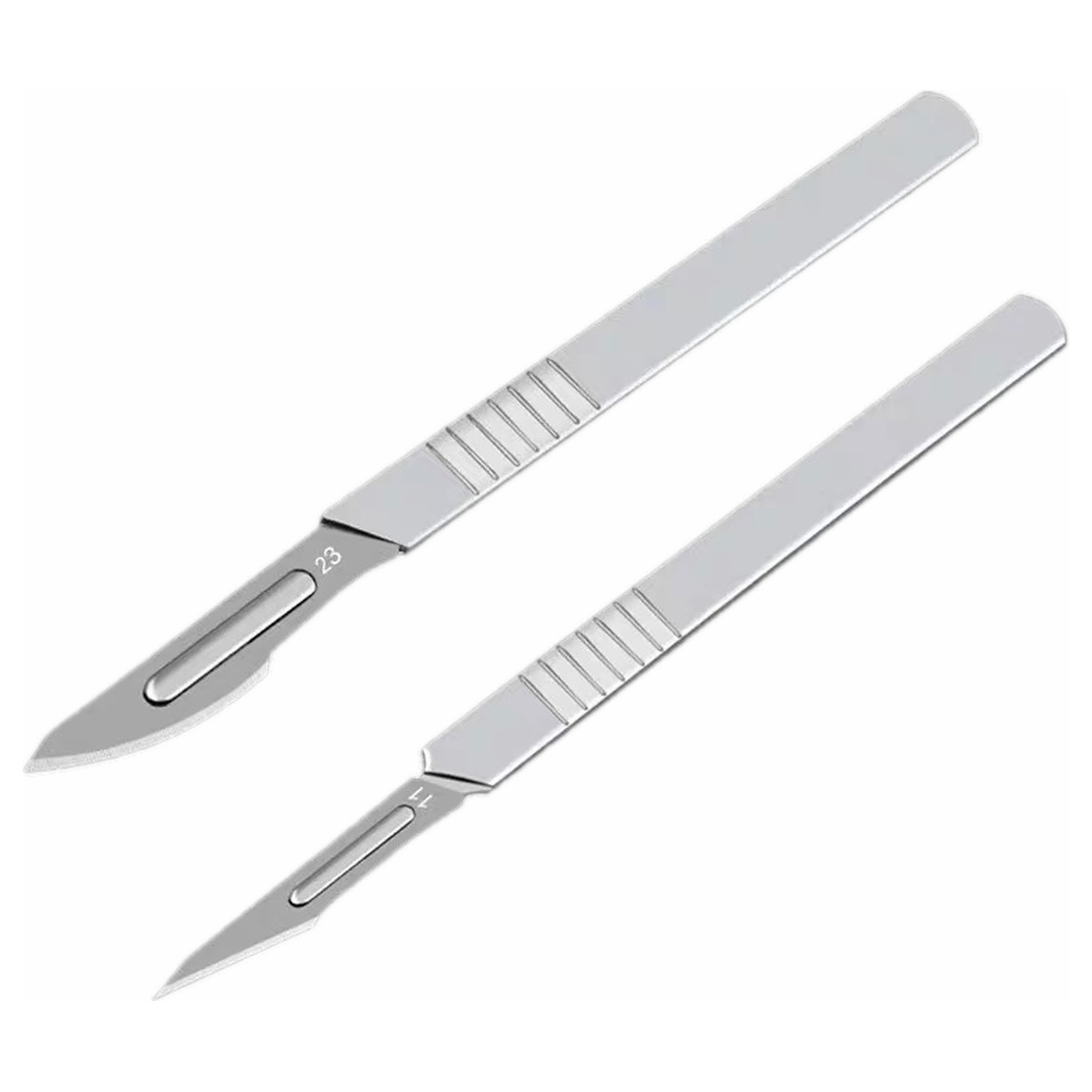
Stainless No.4 scalpel handle with No.23 blade for veterinary soft tis
Categories
Latest News
Contact Us
Contact: Mario
Phone: +8613482534556
Tel: +86-574-62913789
Add: No.33 West Road, Gaoqiao Town, Ningbo, Zhejiang, China