


Vet Surgical Instruments
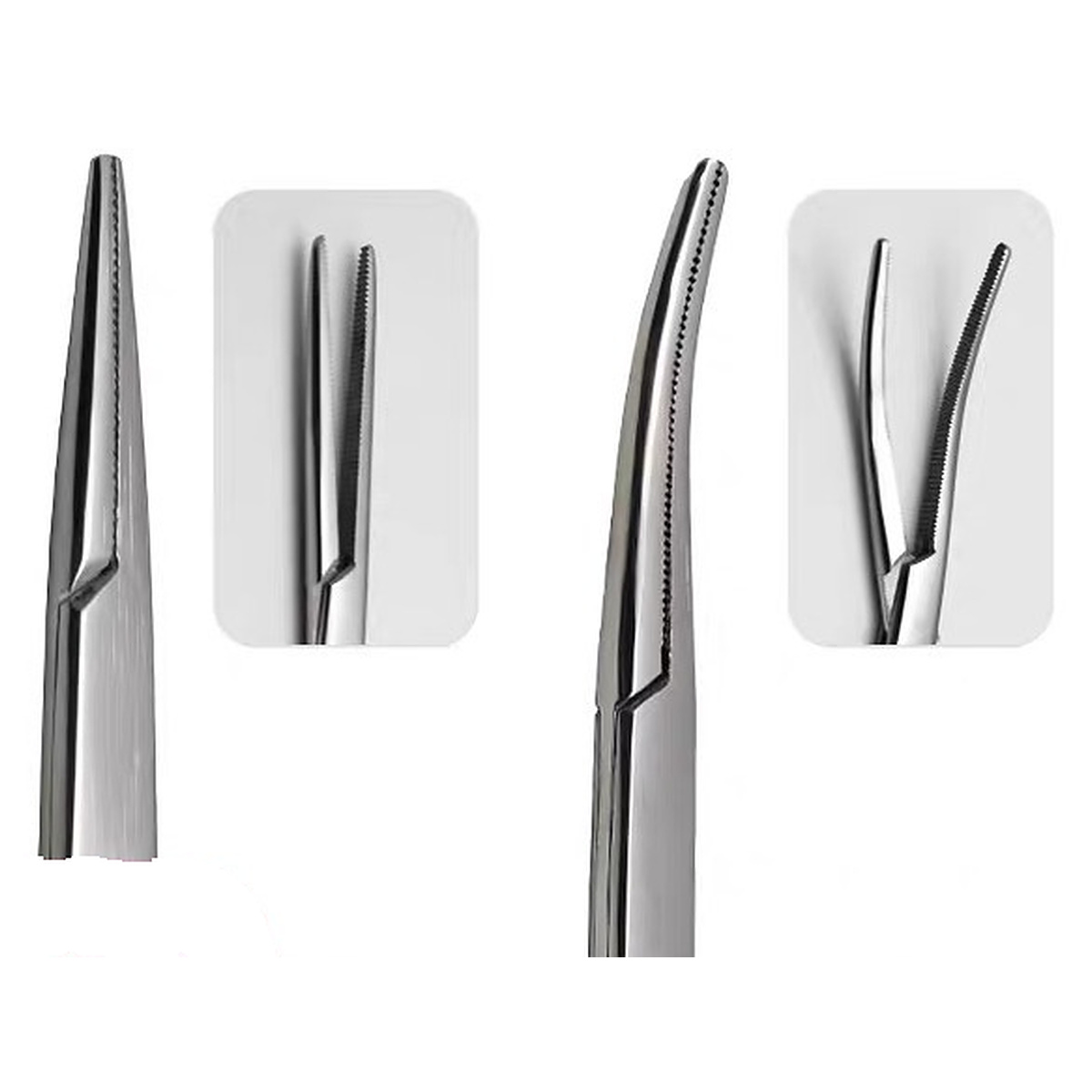
Tissue & Dissecting Forceps
- Set: straight serrated / 1x2 toothed / angled
- Material: stainless steel
- Jaws: serrated, toothed, angled serrated
- Sterilisation: autoclave 134 C
- Product description: Three-pattern set of stainless tissue forceps: straight serrated, fine 1x2 toothed and angled. For atraumatic handling of skin, fascia, bowel and vessel walls.
Tissue forceps are the instrument that decides how much the tissue is damaged before the actual work begins. A rat-toothed forceps that grips too hard crushes the edge of a wound you are about to close, and a smooth forceps that grips too little drops the tissue every time the surgeon looks away. The right pattern for the job is not a matter of preference; it is a matter of what the tissue will tolerate.
This is a three-pattern set: a straight forceps with full-length serrations for holding fascia and skin edges, a fine forceps with 1x2 teeth for picking up delicate tissue without crushing it, and an angled forceps for reaching into a cavity or around a structure at an angle the hand cannot achieve.
The three patterns and where each belongs
The serrated straight forceps is the general-purpose one. Serrations grip without puncturing, so it is the right choice for holding a skin edge, a fascial plane or a piece of bowel wall that has to be stabilised while a suture is placed. The 1x2 toothed forceps has a single tooth on one jaw meeting two on the other; it grips securely with minimal crush and is used on tissue where a crush injury would be unacceptable - vessel walls, nerve, ureter, the edge of a flap. The angled forceps does what a straight one cannot in a deep or narrow field: it approaches the tissue from the side rather than from above.
Pressure is the variable you control
Any forceps will crush tissue if it is squeezed hard enough. The technique point is to hold with the lightest grip that does not drop the tissue, and to grip the minimum area - the edge of the wound, not the middle of the tissue you are trying to preserve. A forceps left hanging on tissue while the surgeon does something else is applying pressure for the whole time; put it down instead.
| Parameter | Value |
|---|---|
| Set contents | Straight serrated, 1x2 toothed, angled |
| Length | Small animal range, lengths confirmed on order |
| Material | Stainless steel |
| Jaw finish | Serrated / 1x2 teeth / angled serrated |
| Sterilisation | Autoclave at 134 C |
| Application | Soft tissue handling, wound closure, cavity work |
Telling a good pair from a worn one
Close the forceps and look along the jaws: they should meet along their whole length, with the tips touching first and no gap at the base. A pair whose tips cross over has been sprung and will not grip evenly. The teeth should be sharp enough to catch on a fingertip dragged across them; a worn 1x2 tooth is worse than a serrated jaw because it looks like it will hold and does not.
Care
Clean the ratchet and the box lock with the instrument open, dry it open, and store it in a rack rather than loose in a tray where the tips take the weight of everything above them. A forceps stored with the jaws closed against the ratchet will lose its spring, and a sprung forceps is a forceps that drops tissue at the worst possible moment.
Ordering
Sold as the three-pattern set or as individual patterns in quantity. If your caseload is mostly feline and small canine, the fine 1x2 pair is the one that wears out first; tell us and we will quote it as the bulk item with the other two as singles.
Related Products
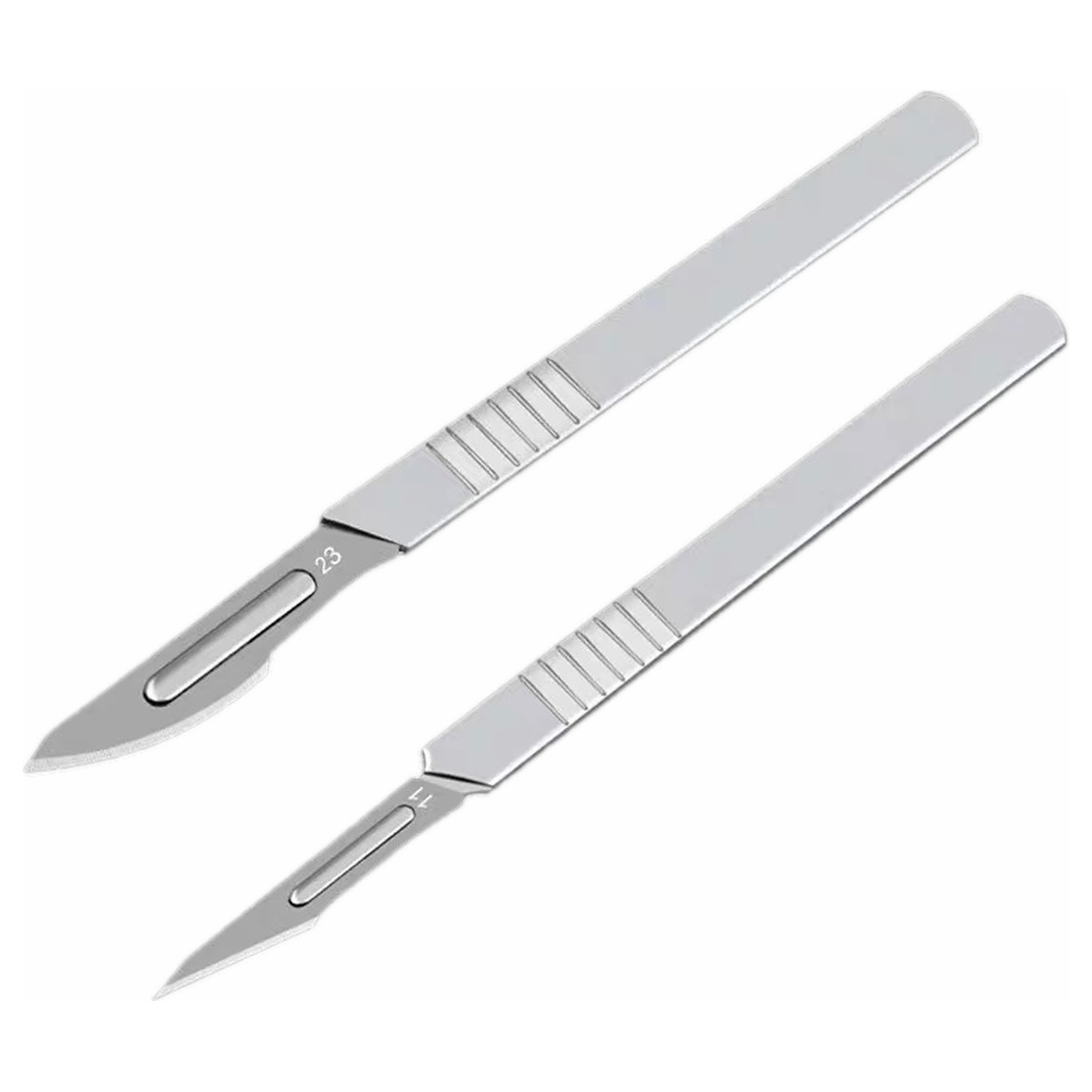
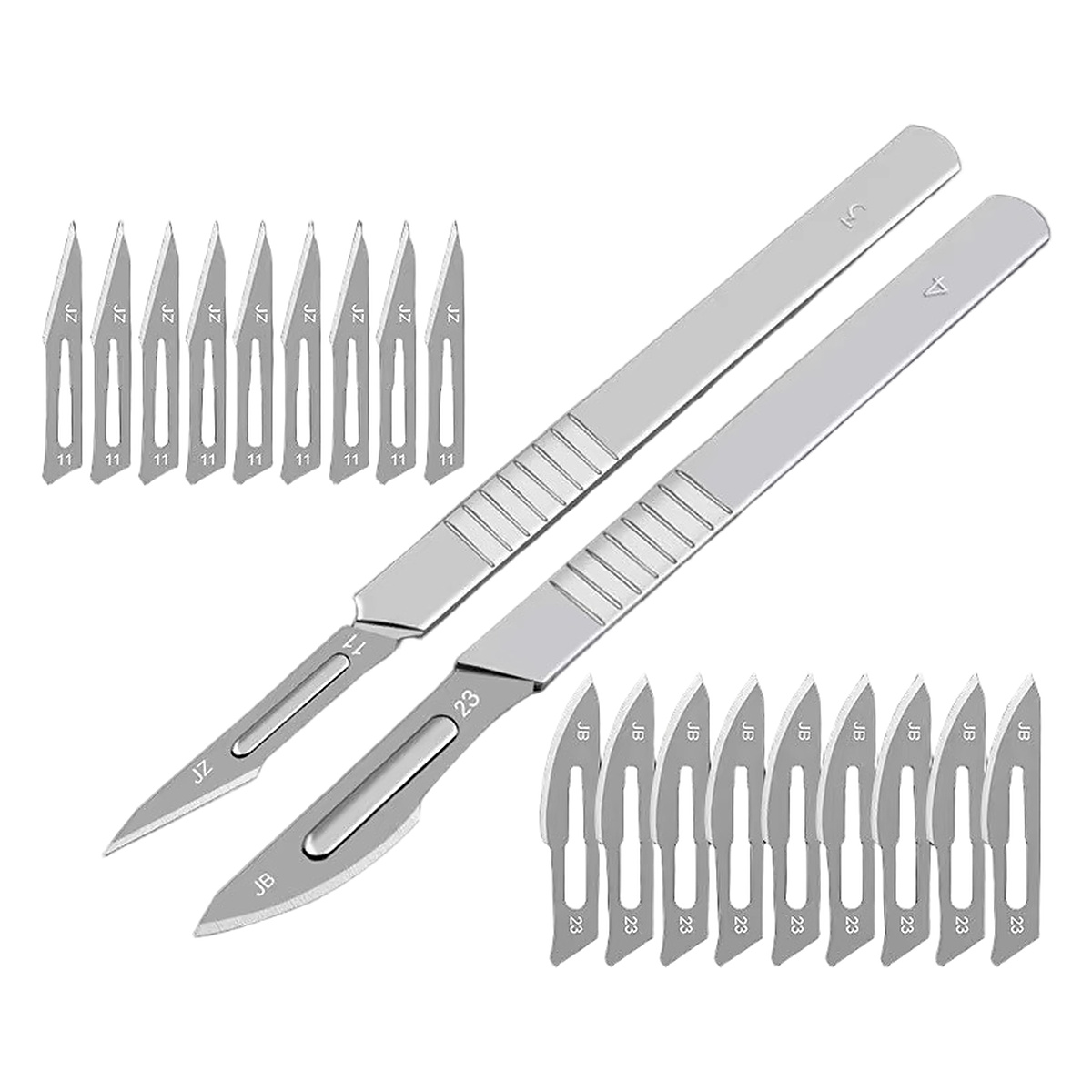
Stainless No.4 scalpel handle with No.23 blade for veterinary soft tis
Categories
Latest News
Contact Us
Contact: Mario
Phone: +8613482534556
Tel: +86-574-62913789
Add: No.33 West Road, Gaoqiao Town, Ningbo, Zhejiang, China