


Vet Surgical Instruments
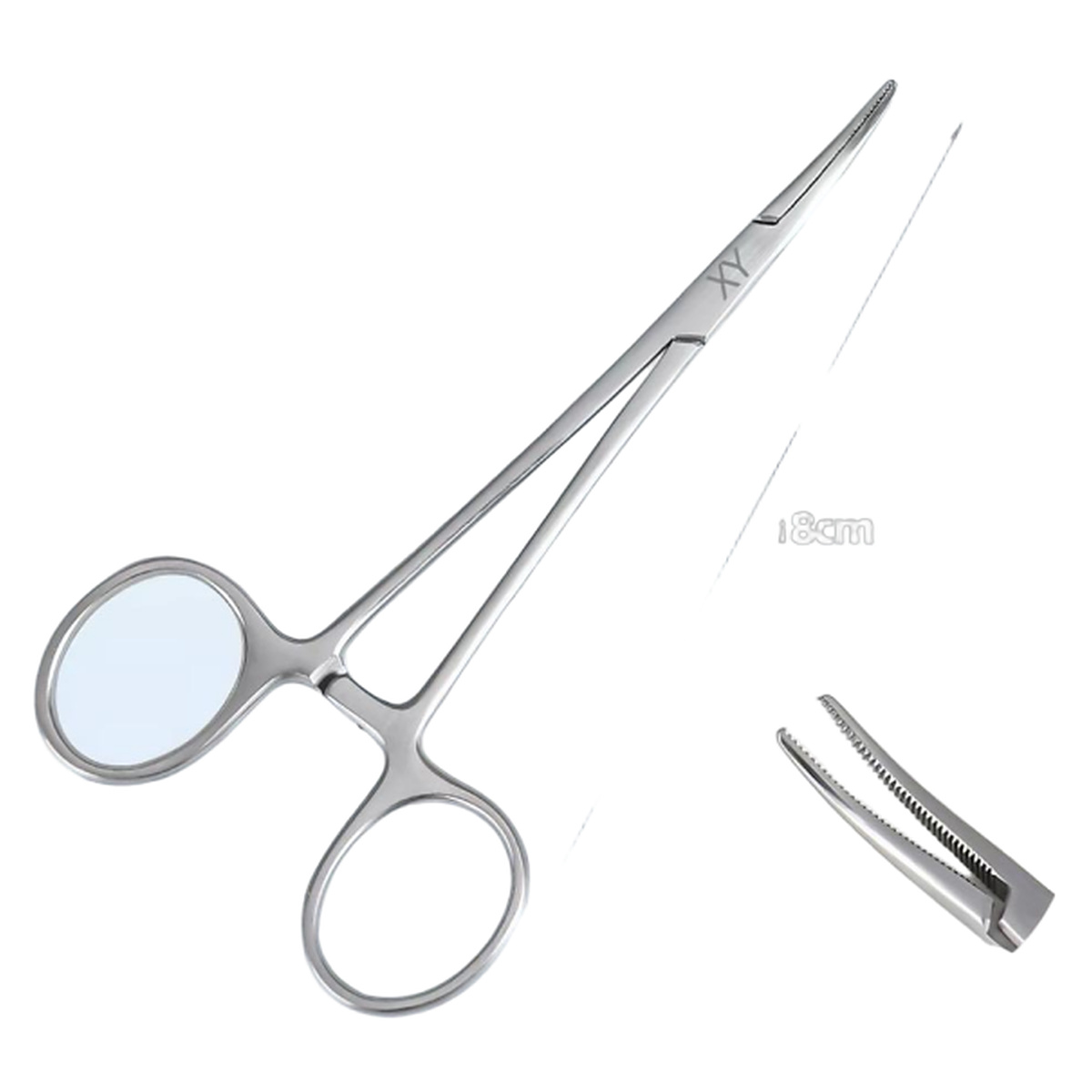
Curved Haemostatic Forceps
- Length: 10 cm
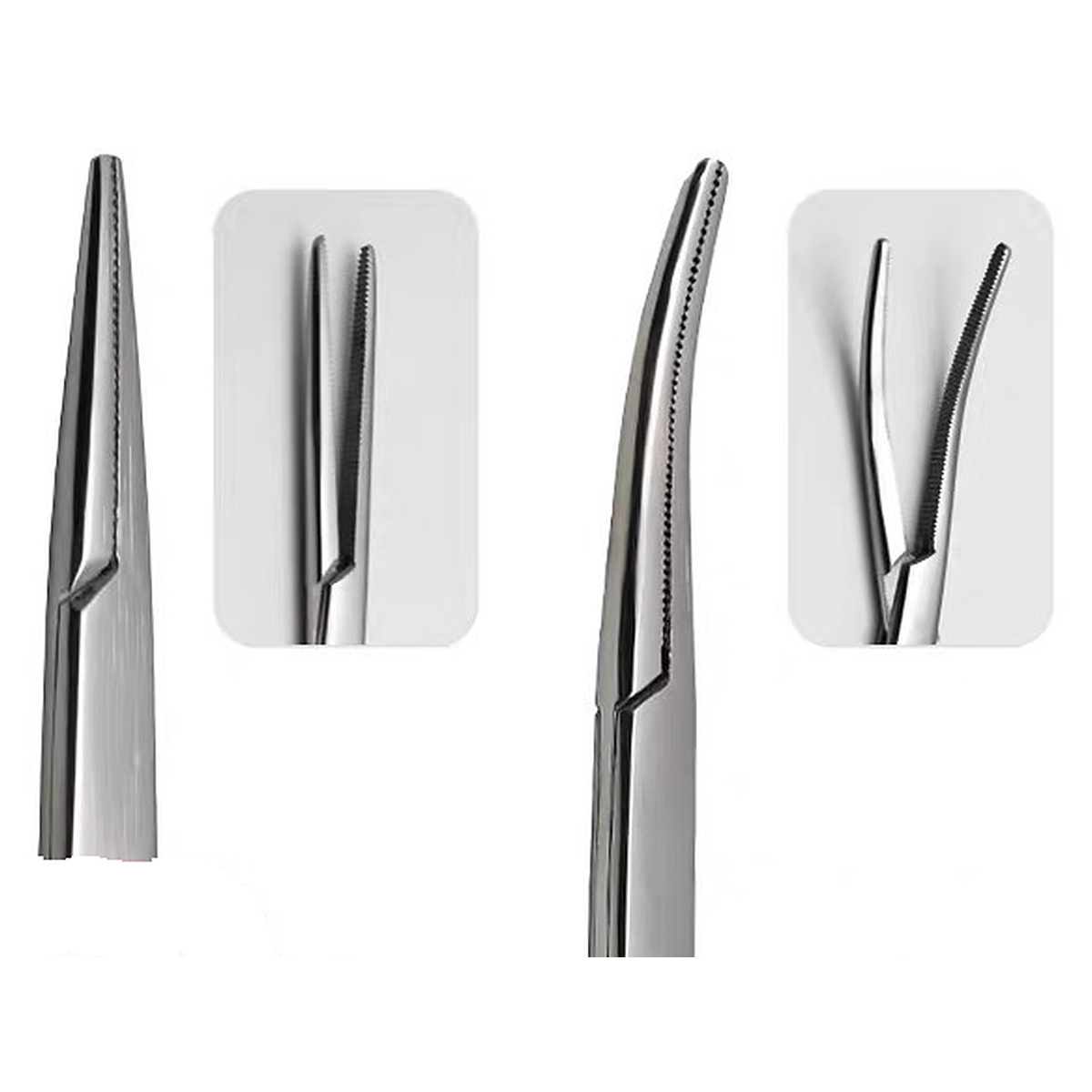
- Jaw: curved, full-length serrations
- Lock: box lock with ratchet
- Sterilisation: autoclave 134 C
- Product description: Curved haemostatic forceps, 10 cm, with full-length serrated jaw and ratcheted box lock. Stainless steel, autoclavable; also available in 14 cm and 16 cm.
A haemostat is the instrument a surgeon reaches for without looking, and the reason one pair feels right and another does not comes down to three things: the length of the jaw, the pattern of the serrations, and whether the ratchet holds at the pressure you want rather than at the pressure it was machined to.
This is a curved haemostatic forceps with a 10 cm overall length, a serrated jaw that closes along its full length, and a box lock that keeps the jaws aligned when they are closed on a vessel. The curve is the working part: it lets the tip go around a vessel in a way a straight jaw cannot, and it keeps the surgeon's hand out of the line of sight when the bleeder is deep in a wound.
Straight or curved
Straight forceps are for picking up a bleeding point on a surface you can see straight on. Curved forceps are for going into a cavity and around a structure - the curve gives you the ability to come at a vessel from the side, and to see the tip while your hand is outside the wound. Most abdominal work is done with a curved pair for that reason.
The jaw
Full-length transverse serrations grip a vessel without cutting it, which is what you want for a pedicle you are about to ligate. A jaw with partial serrations, or with a longitudinal groove, is a different instrument for a different job - it is designed to hold tissue rather than to occlude a vessel, and using it on a pedicle is how a vessel slips. Check the jaw closes evenly along its length: hold the forceps up to the light and close them on a piece of paper; a jaw that grips at the tip and not at the base has a bent shank and will not hold.
| Parameter | Value |
|---|---|
| Type | Curved haemostatic forceps |
| Length | 10 cm |
| Jaw | Serrated along full length |
| Lock | Box lock with ratchet |
| Material | Stainless steel |
| Sterilisation | Autoclave at 134 C |
Length and lever
Ten centimetres is a feline and small canine length: long enough to reach a pedicle in a cat, short enough that the tips do not wander when the fingers move. A longer forceps gives more reach but less control at the tip, and in a small patient the extra length is a liability rather than an advantage. If you operate on large breeds, the same pattern in 14 cm and 16 cm is available.
Keeping a pair usable
Clean the box lock properly. It is the one part of a haemostat that a brush does not reach, and it is where dried blood collects, stiffens the joint and eventually rusts it shut. Work the joint open and closed under running water, then dry it open. Do not store haemostats with the ratchet closed on the last notch: the spring takes a set, and a pair that has been stored clamped for months will not hold at low pressure when it is needed.
Never use a haemostat as a needle holder or as a wrench. The jaws are hardened for compression, not for gripping a needle, and the serrations that make it hold a vessel are the first thing to be damaged.
Ordering
Available singly or in sets of six, in curved and straight patterns and in three lengths. Tell us the patient range you work with and we will quote a set mix rather than six of one size.
Related Products
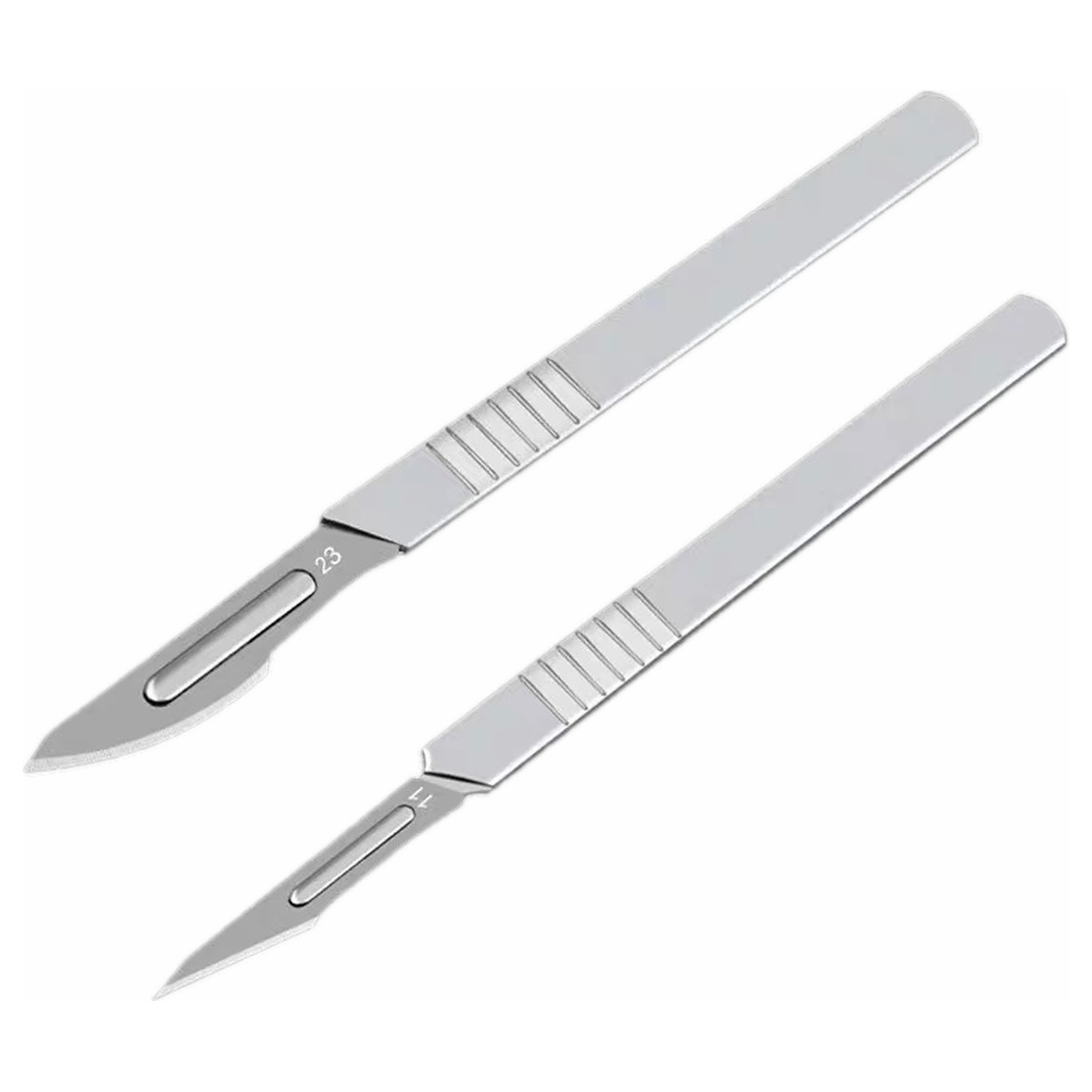
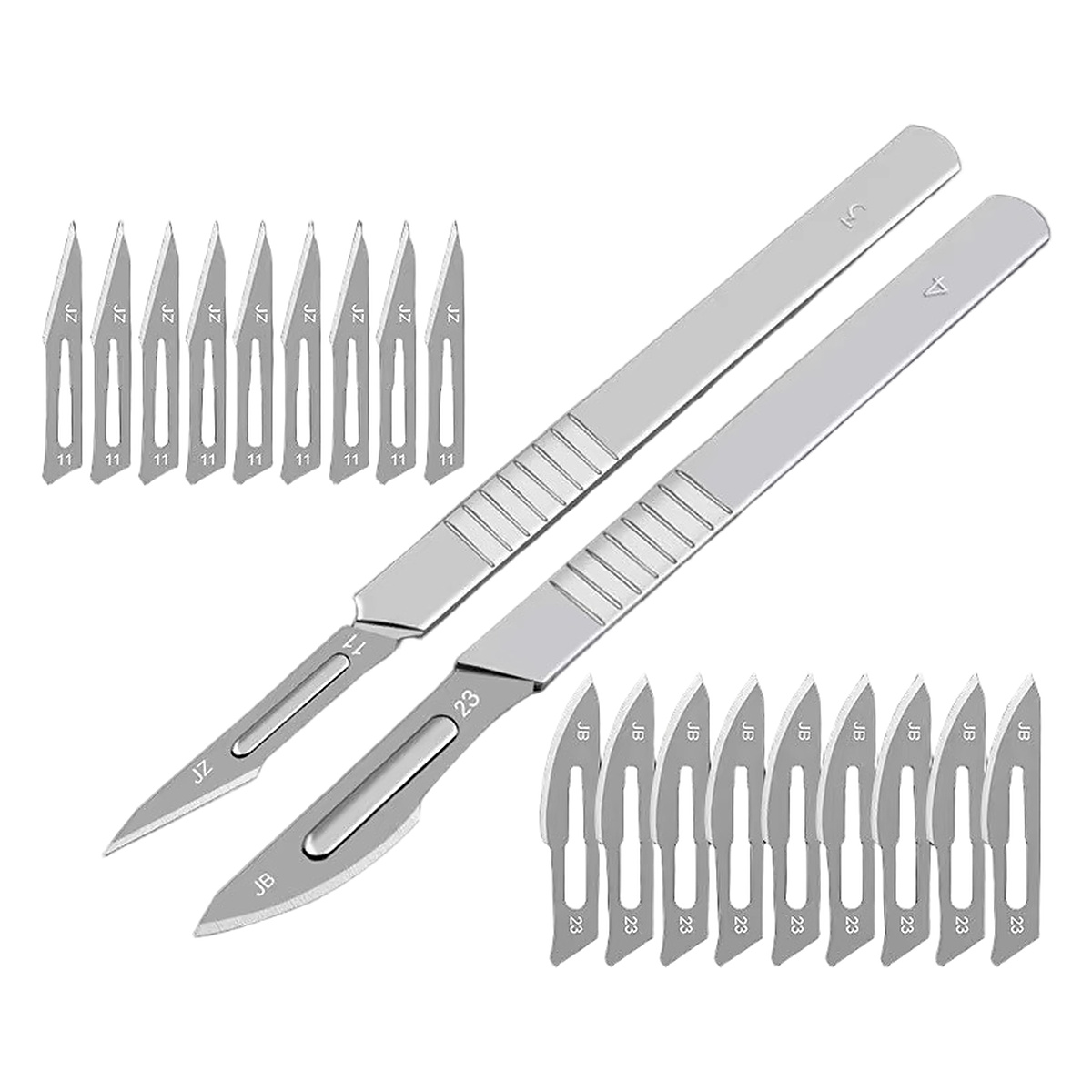
Stainless No.4 scalpel handle with No.23 blade for veterinary soft tis
Categories
Latest News
Contact Us
Contact: Mario
Phone: +8613482534556
Tel: +86-574-62913789
Add: No.33 West Road, Gaoqiao Town, Ningbo, Zhejiang, China