


Vet Anesthesia & Airway
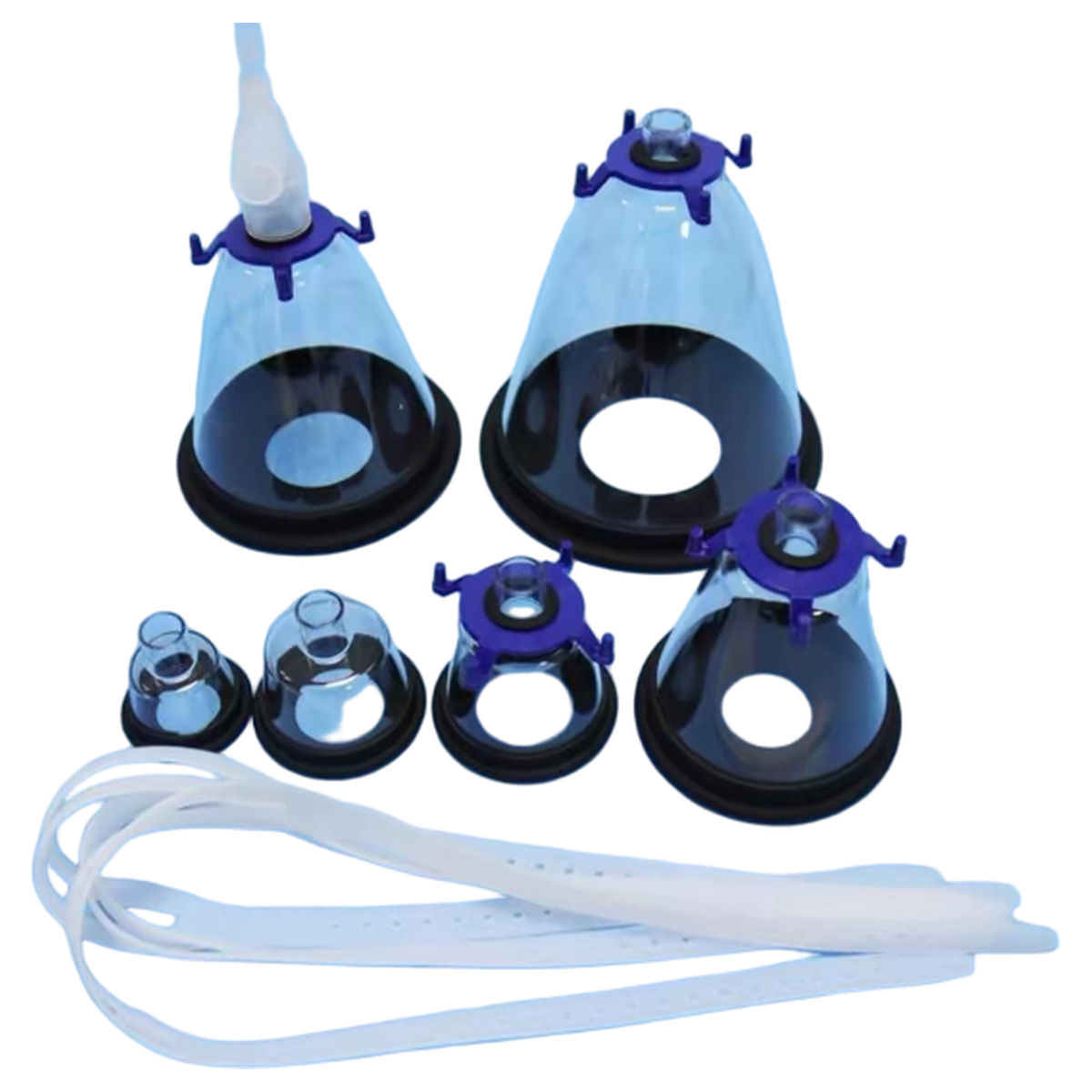
Veterinary Oxygen Mask Kit - 5 Sizes with Tubing
- Sizes: 5, kitten to large canine
- Cone: clear PVC, low dead space
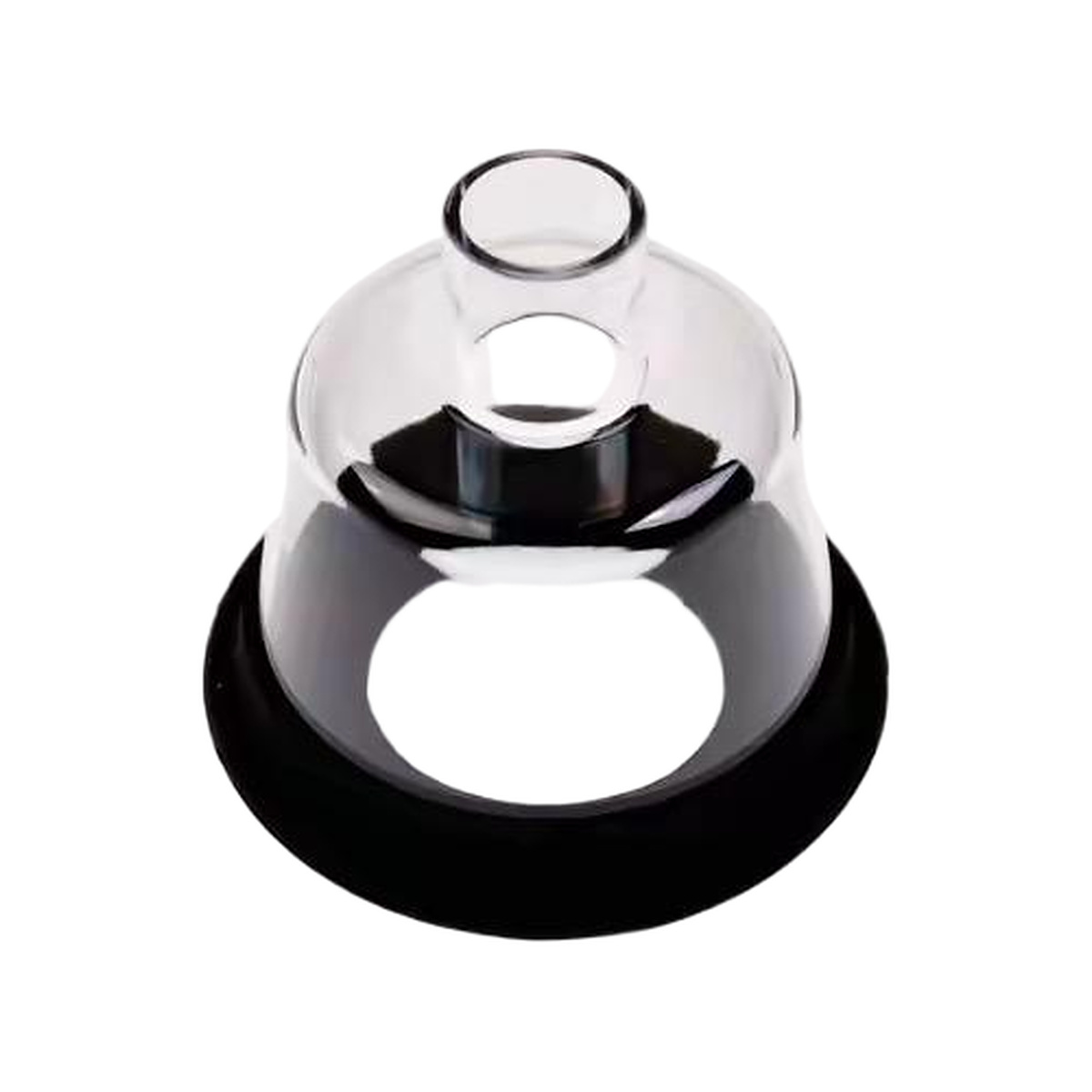
- Rim: soft rubber, eye clearance
- Supplied: 2 tubes, flow clamps
- Product description: Veterinary oxygen mask kit with five graduated cones from kitten to large canine, soft sealing rims, tubing and flow clamps. For recovery oxygen, emergency flow-by and nebulisation.
An oxygen mask looks like the simplest thing on the trolley and is one of the easiest to get wrong. Two numbers decide whether it works: how well the rim seals around the muzzle, and how much dead space sits between the rim and the inlet. A mask that seals well but has a large dead space makes the patient rebreathe its own carbon dioxide; a mask with a small dead space that does not seal delivers room air around the edges.
This is a set of five cone masks in graduated sizes with soft rims, supplied with two lengths of tubing and flow clamps. The cone shape keeps dead space low for a given rim diameter, and the soft black rim conforms to the muzzle and around the eyes without pressing on the globe. The sizes run from a kitten or a rabbit up to a large canine, so the rim can be matched to the patient rather than the next size up being used because the right one is in the sink.
Matching the mask to the patient
Pick the mask by muzzle width, not by body weight. The rim should sit on the muzzle with the nose inside the cone and the eyes clear; if the rim crosses the eyes it will leak and the animal will paw at it as it wakes. In brachycephalic breeds the cone sits further forward and a smaller size often seals better than the one the weight suggests.
Where these are used
- Recovery - oxygen over the muzzle while the patient is still recumbent and the airway is not protected
- Emergency - flow-by oxygen before vascular access is achieved
- Nebulisation - the inlet takes a nebuliser outlet, so the same mask can be used for inhaled therapy
- Short procedures - pre-oxygenation before induction in a patient that will not tolerate a chamber
What these masks are not for
They are not an anaesthetic circuit. There is no unidirectional valve and no reservoir bag, so a mask over the muzzle will not maintain anaesthesia and will not ventilate an apnoeic patient. For maintenance you need a proper circuit with a tight-fitting mask or a tube. Using an oxygen mask as a delivery device for inhalant anaesthetic is a common improvisation and a bad one: the patient rebreathes and the depth is unpredictable.
| Parameter | Value |
|---|---|
| Sizes | 5, kitten/rabbit to large canine |
| Cone | Clear PVC, low dead space |
| Rim | Soft black rubber, eye clearance |
| Inlet | Standard tapered connector, fits oxygen and nebuliser tubing |
| Supplied with | 2 lengths of tubing, flow clamps |
| Reusable | Wipe or soak per clinic protocol; not autoclavable |
Practical points
Set the flow before putting the mask on. A mask held against a struggling patient at 10 L/min is loud and frightening; start low, let the animal settle, then increase. Watch the rim, not the tubing: if the rim is lifting with each breath the flow is too high or the mask is too small. In a cat, a mask that covers the whole face is worse than a small one over the nose, because the dead space goes up and the seal does not.
Clean between patients with a detergent wipe and allow to dry fully before storage, since moisture in the cone is a reservoir for whatever was in the last patient's airway. Replace the rim when it hardens or splits, because a hardened rim stops sealing and the mask quietly stops working.
Buying
Sets of five with tubing, or individual sizes in quantity. If your caseload is mostly feline and small canine, a set weighted to the three small sizes is available on request.
Related Products
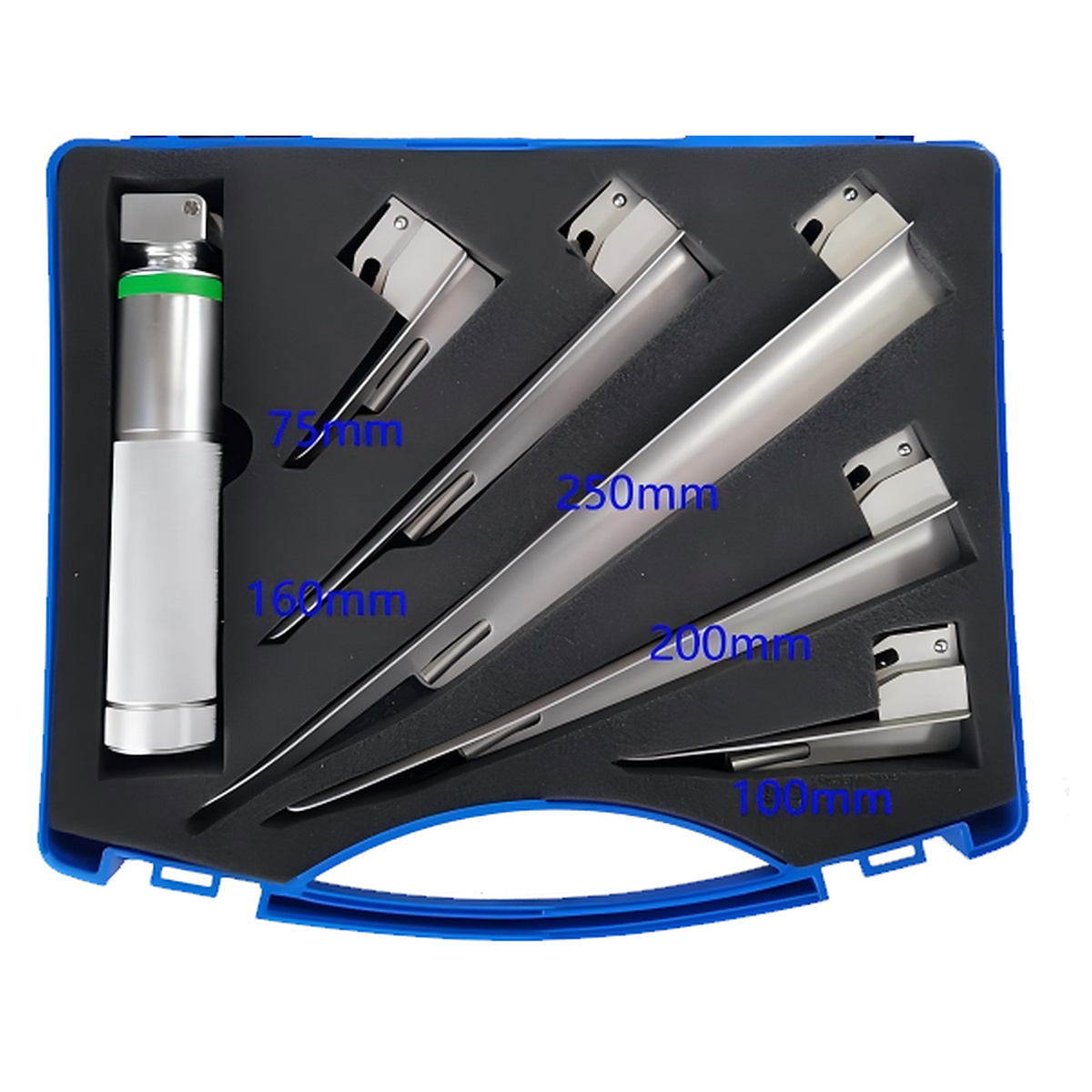
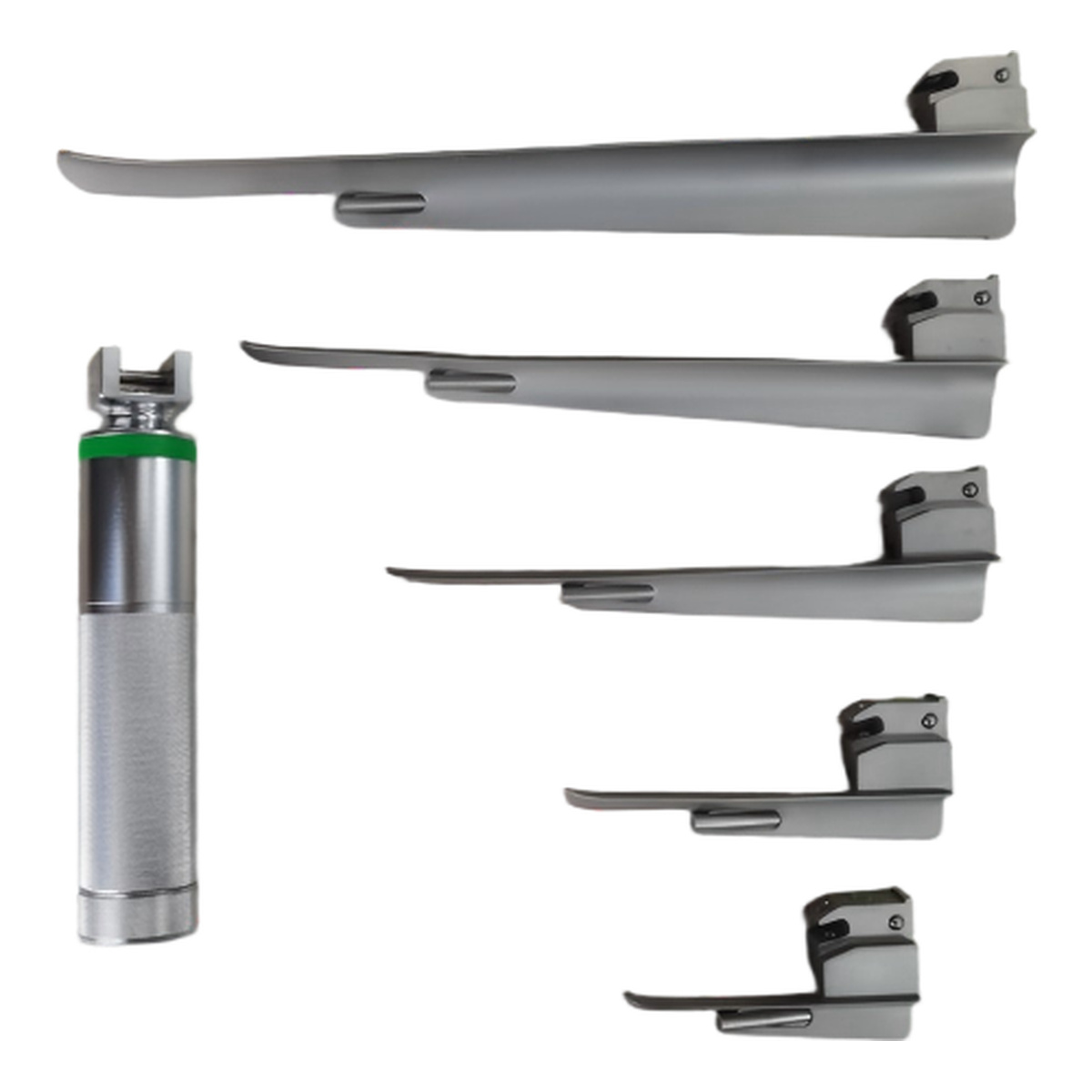
Veterinary laryngoscope set with five straight Miller blades from paed
Categories
Latest News
Contact Us
Contact: Mario
Phone: +8613482534556
Tel: +86-574-62913789
Add: No.33 West Road, Gaoqiao Town, Ningbo, Zhejiang, China