


Vet Anesthesia & Airway
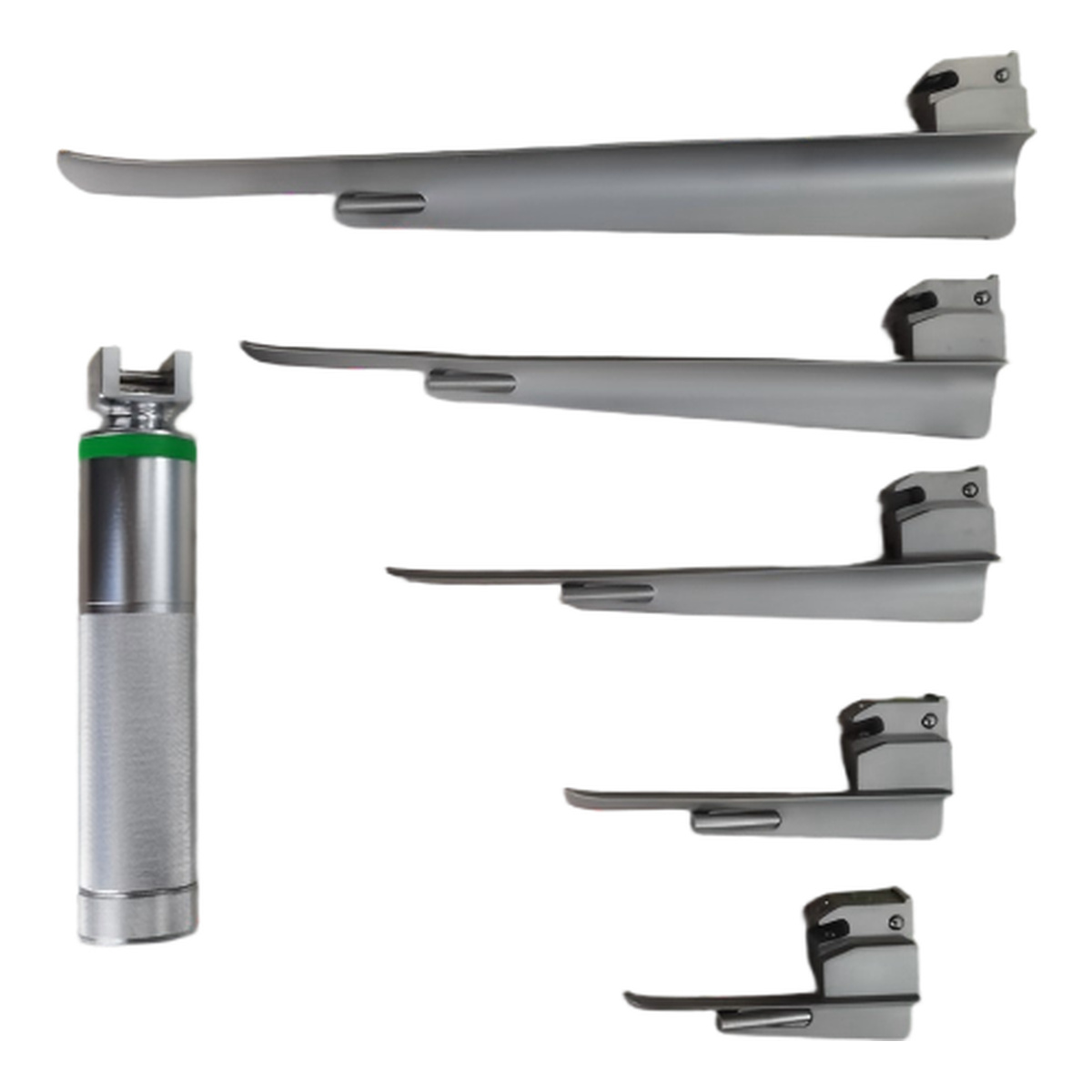
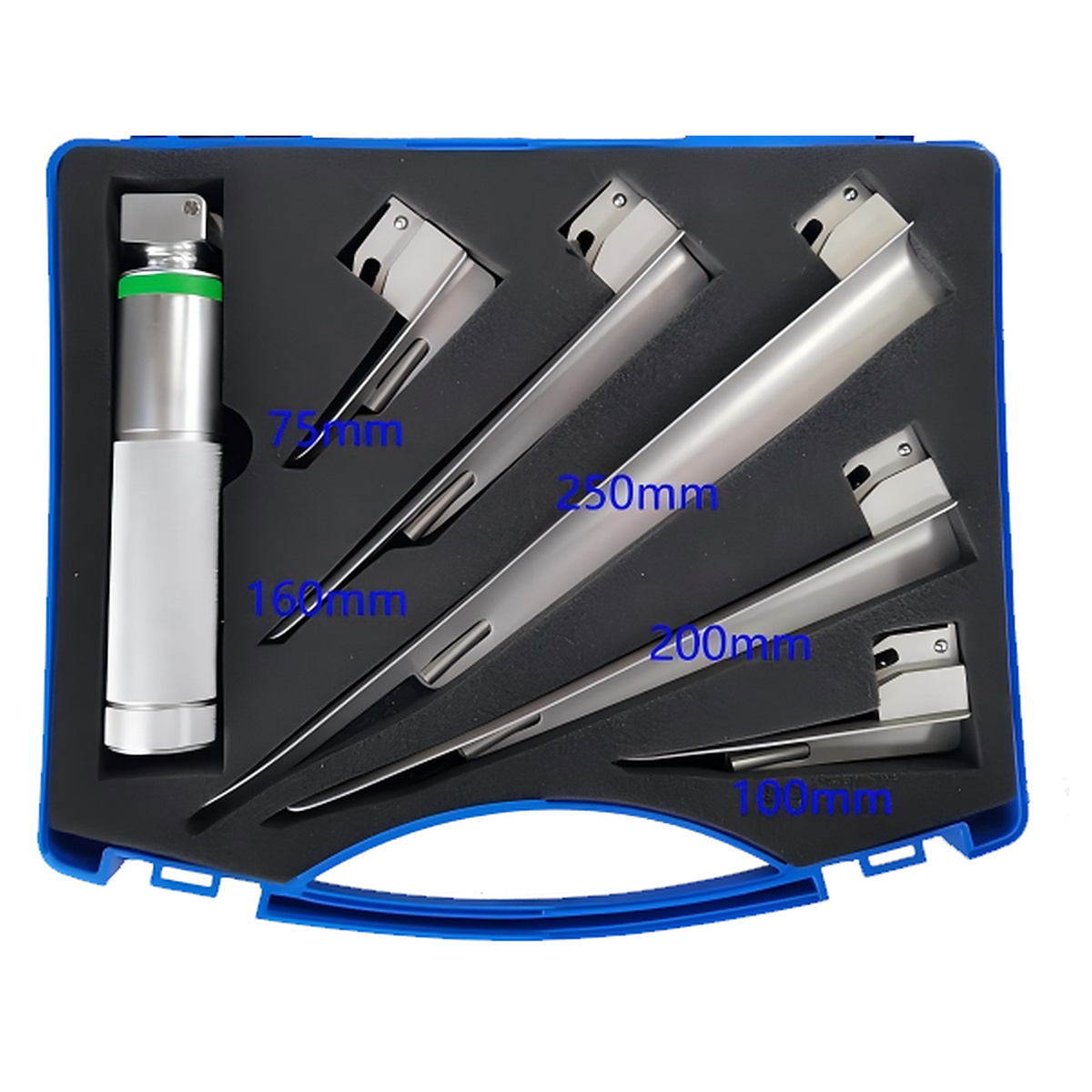
Veterinary Laryngoscope Set - Miller Blades, 5 Sizes
- Blades: Miller straight, 5 sizes
- Handle: stainless, battery light
- Range: paediatric to large canine
- Sterilisation: blades autoclave
- Product description: Veterinary laryngoscope set with five straight Miller blades from paediatric to large canine, stainless handle with battery light. For endotracheal intubation in dogs, cats and rabbits.
Most small animal intubations fail at the same point: the epiglottis. In the dog and especially in the cat it is long, floppy and sits over the laryngeal opening, so a blade that lifts it out of the way rather than pushing it down is the difference between a clean tube pass and three attempts with a desaturating patient.
This set is built around straight (Miller) blades, which is the pattern most veterinary anaesthetists reach for in cats and small dogs. A straight blade sits under the epiglottis and lifts it forward; a curved blade sits in the vallecula and pulls it indirectly, which works well in the human airway and less reliably in the cat. Five blades cover the range from a toy breed or a rabbit up to a large canine, and they clip onto a single handle.
The five blades
The set runs from a short paediatric blade for cats, rabbits and toy breeds, through two intermediate sizes for small and medium dogs, to longer blades for large and giant breeds. Blade length is the whole point of having five: a blade that is too short will not reach past the epiglottis no matter how the head is positioned, and one that is too long buries the tip in the larynx and gives no view at all. Choosing by patient size rather than by what is already on the trolley is what makes the difference.
The handle
The handle is stainless with a knurled body for a wet glove, and the lamp contact is at the blade end so the light comes on as the blade locks. The green collar marks the fitting: blades and handles have to be the same fitting pattern, and mixing patterns from different makers is the usual reason a blade clicks on but does not light. The handle takes standard cells and the battery is changed without tools.
| Parameter | Value |
|---|---|
| Blade pattern | Miller, straight |
| Blades supplied | 5 sizes, paediatric to large canine |
| Handle | Stainless, knurled, light contact at blade end |
| Light source | Battery handle, lamp in blade |
| Sterilisation | Blades autoclave; handle wiped, battery removed |
| Application | Endotracheal intubation, canine and feline |
Technique notes that save teeth
Do not use the upper incisors as a fulcrum. In the cat and the small dog the crown is thin and the blade will chip it, and a chipped incisor in a patient that is about to be anaesthetised is a problem you carry into recovery. Lever against the blade tip in the airway, not against the tooth. Keep the head and neck in a straight line rather than over-extended, and have the tube pre-cut and the tie ready before the blade goes in, because the useful window is short.
Check the lamp before induction, not after. A blade that lights on the trolley and not in the mouth is usually a poor contact, and a spare handle on the shelf costs less than a wasted induction.
After use
Blades come off the handle, are cleaned of organic debris, and go through the autoclave as separate items. The handle is wiped and dried with the battery out - it is not immersion-proof, and a handle that has been through a water bath will corrode at the contact and fail intermittently for months before it fails completely.
Sizes can be bought as a set or as single blades. If you work mostly with cats, tell us and we will quote a set weighted to the small end rather than the five-size standard.
Related Products
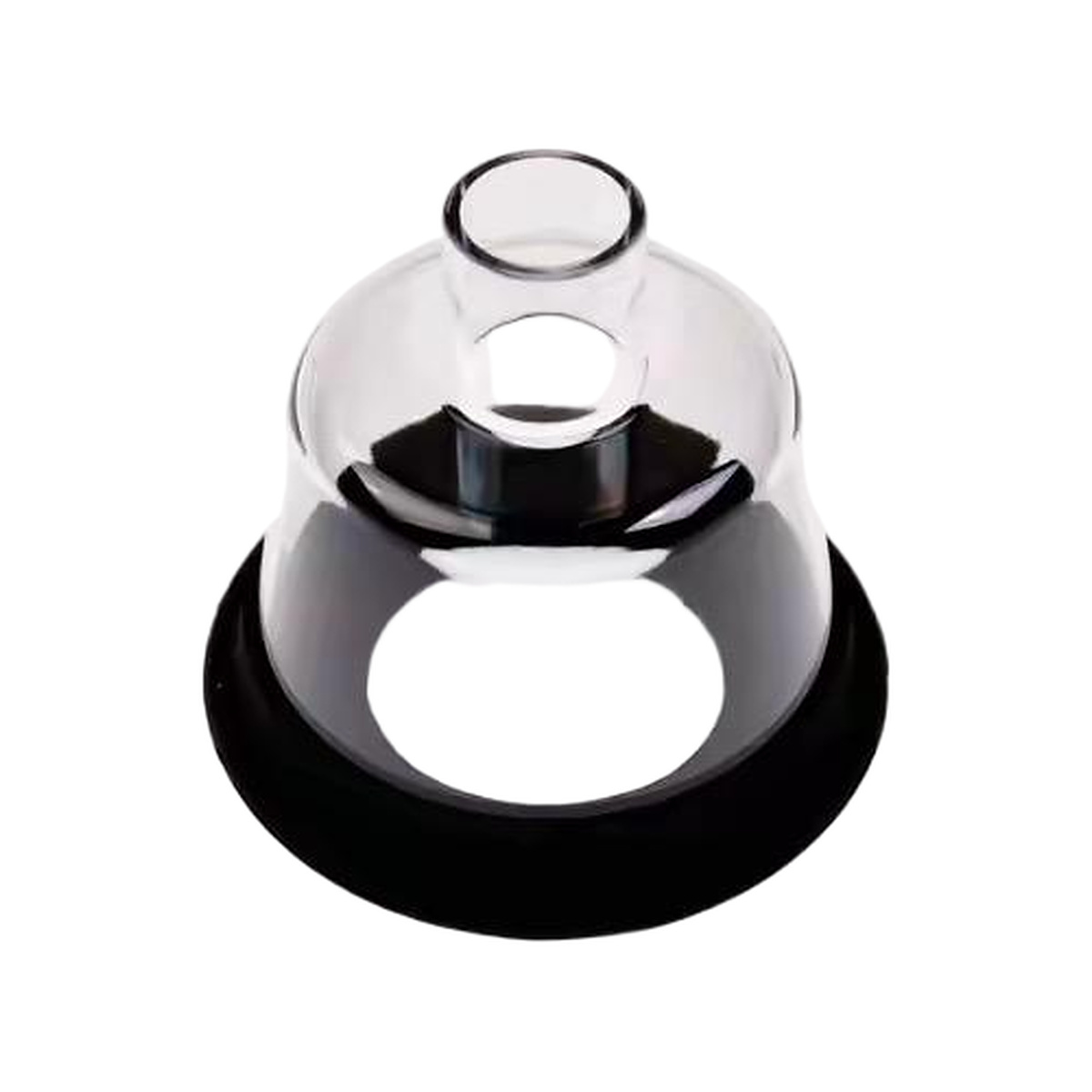
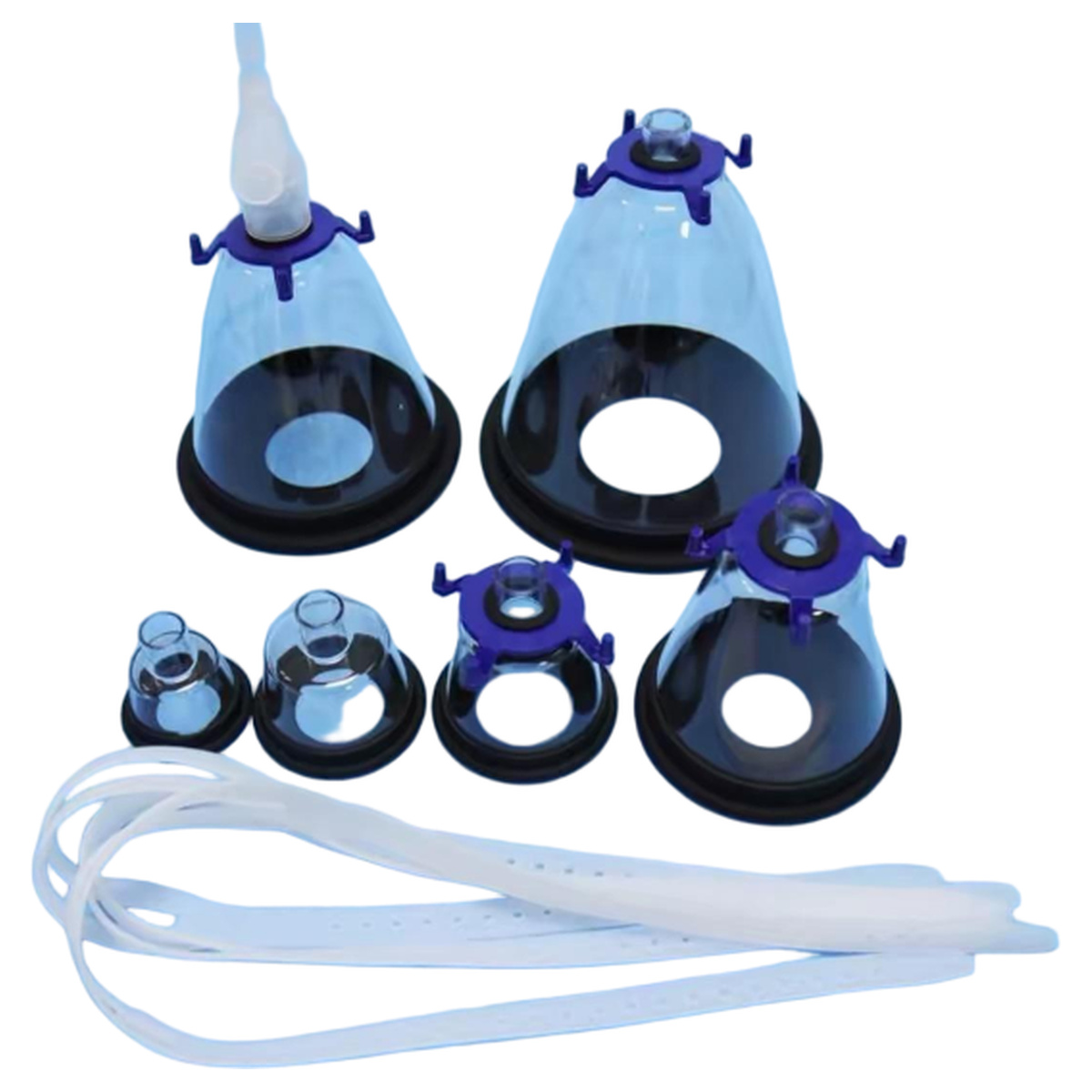
Veterinary Oxygen Mask Kit - 5
Veterinary oxygen mask kit with five graduated cones from kitten to la
Categories
Latest News
Contact Us
Contact: Mario
Phone: +8613482534556
Tel: +86-574-62913789
Add: No.33 West Road, Gaoqiao Town, Ningbo, Zhejiang, China