


Medical
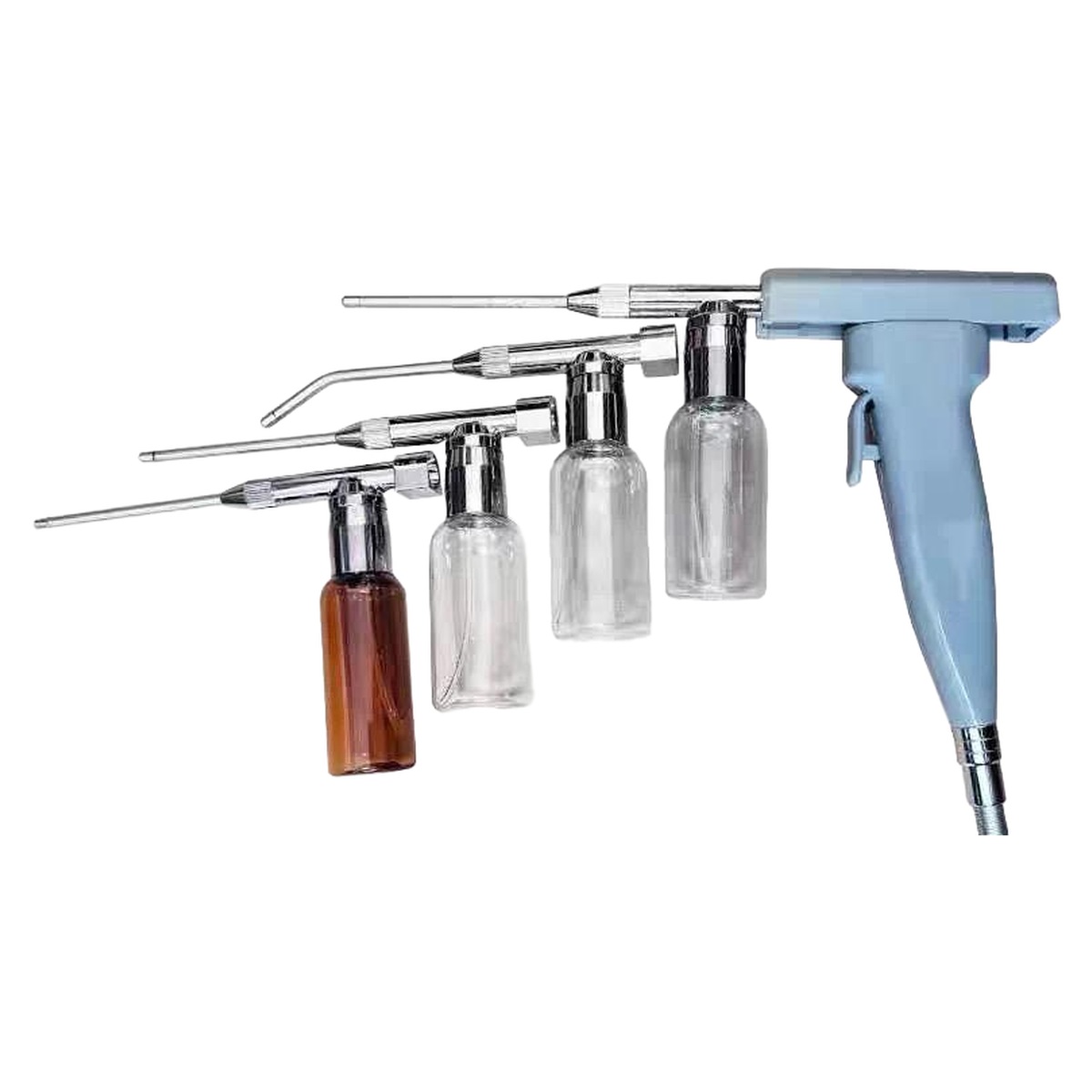
ENT Spray Tips and Nozzles
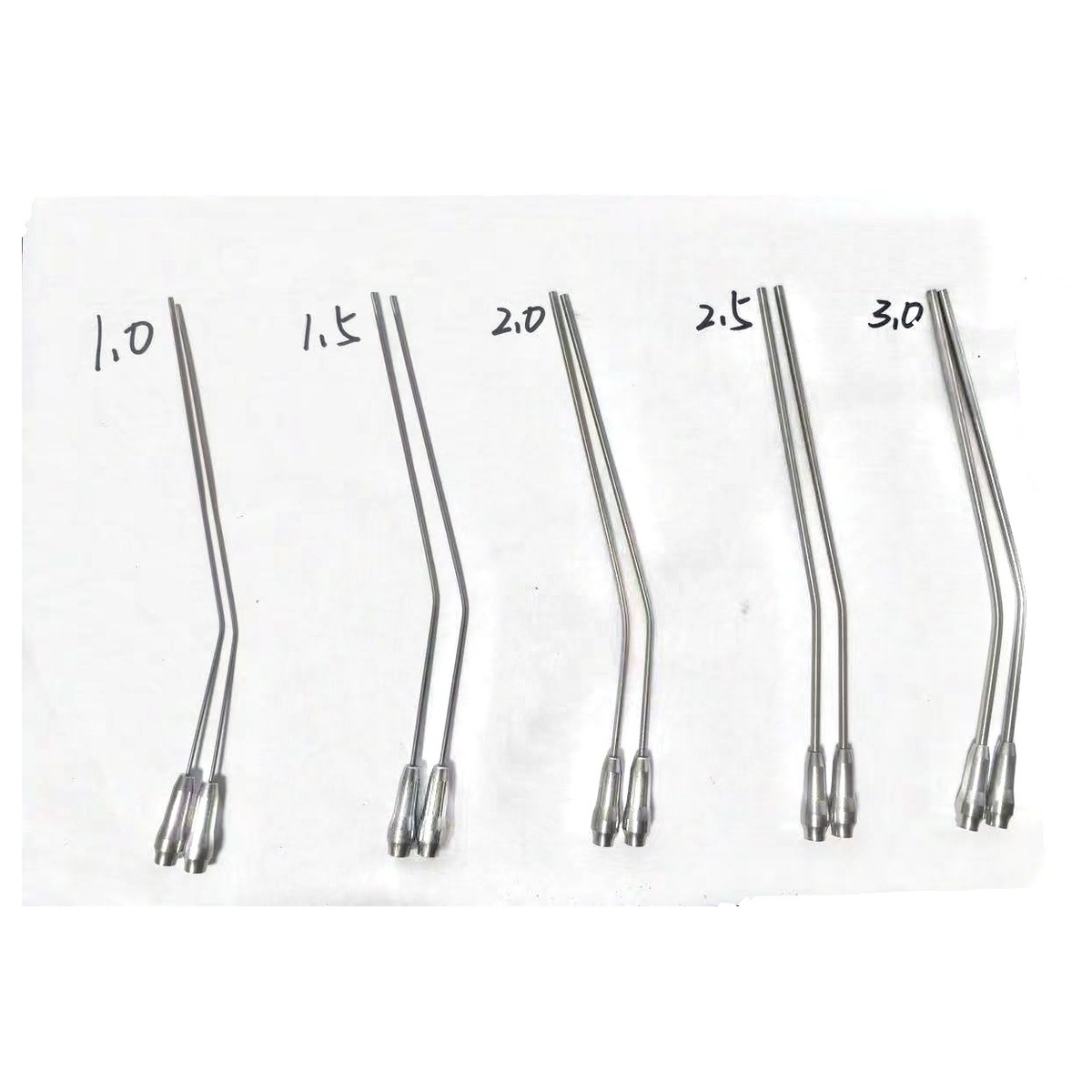
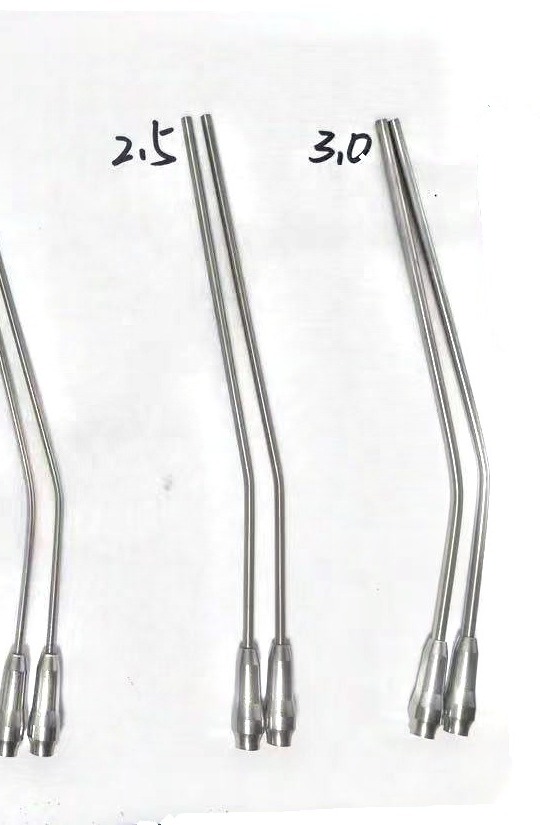
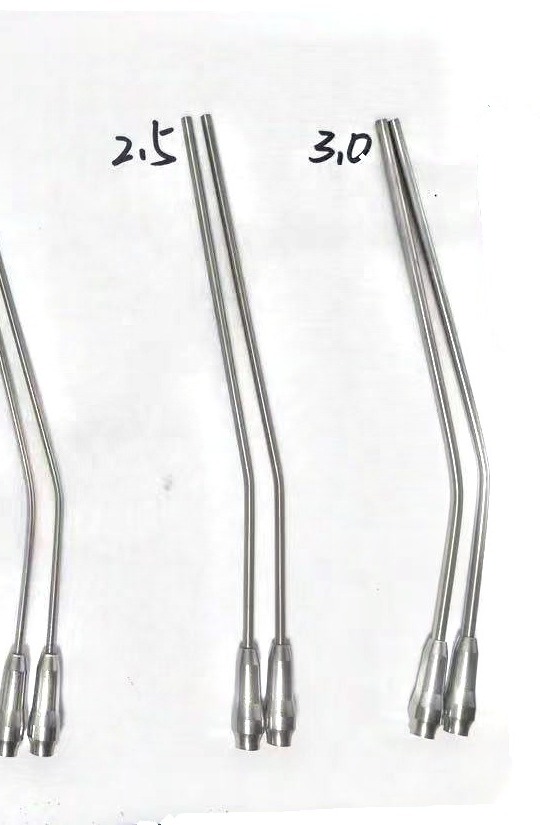
- Bore: 1.0 / 1.5 / 2.0 / 2.5 / 3.0 mm
- Material: stainless steel, curved
- Fit: ENT spray guns and atomisers
- Packing: pairs
- Product description: Replacement ENT spray nozzles in 1.0, 1.5, 2.0, 2.5 and 3.0 mm bore, curved stainless steel, supplied in pairs for ENT spray guns and atomisers.
The nozzle is the cheapest part of an ENT gun and the part that decides whether the gun works. It is also the part that gets thrown away rather than cleaned, which is why a clinic that owns six guns works through nozzles steadily and then finds them hard to buy.
These are replacement nozzles for ENT spray guns, atomisers and powder insufflators: curved stainless steel, five bore sizes, supplied in pairs.
What the bore decides
The bore sets the flow and the droplet size together, and they move in opposite directions from what most buyers expect. A small bore passes less liquid, and because less liquid meets the same airstream it breaks into finer droplets - a mist that coats without running off. A large bore passes more and produces a coarser spray, which is what is wanted when the job is volume to the pharynx rather than coating nasal mucosa.
That catches people out in both directions: the largest bore because it "sprays more" gives a wet stream that runs out of the nose, and the smallest because it "sprays finer" gives a mist that is mostly lost before it reaches the surface.
The bend
All five sizes share one bend, which is what lets the tip sit past the nasal valve or over the tongue while the operator keeps a line of sight. The bend is set at manufacture. Bending a nozzle by hand work-hardens the steel and puts a crease in the bore that collects residue and disturbs the spray from then on.
Choosing a size
Match the bore to the work first, the gun second. Smaller bores for nasal work where the spray must stay where it is put; middle sizes for routine throat spraying; the largest where volume is being delivered and the surface washed rather than coated. Then check the seat - all five share a bend and a length, but the base is matched to the gun's nozzle socket, and a nozzle that does not seat fully leaks at the joint and sprays sideways.
Why pairs
One on the gun, one clean and drying. A single nozzle puts the gun out of service while it dries, which in a busy clinic means it goes back on wet and the next patient gets the residue.
Cleaning
Flush with warm water before the medication dries; ultrasonic cleaning is fine for the steel. What is not fine is clearing a blocked nozzle with a wire or a needle - the bore is a smooth drawn tube, and a wire scrapes it, leaving a scratch that collects residue and changes the pattern for good. A blocked nozzle is soaked, not probed.
When to replace
Three signs, in the order they appear: the pattern widens and becomes uneven; the spray turns from a mist into a spitting stream at the same pressure; the flow drops even after cleaning. The first two are wear at the orifice, the third is residue. A gun blamed for a poor spray usually has a worn nozzle on it.
| Bore | Typical use | Spray character |
|---|---|---|
| 1.0 mm | Nasal, localised | Finest mist, lowest volume |
| 1.5 mm | Nasal, general | Fine mist |
| 2.0 mm | Nasal and pharyngeal | Medium |
| 2.5 mm | Pharyngeal | Wetter, higher volume |
| 3.0 mm | Pharyngeal, washing | Coarsest, highest volume |
Before ordering
Tell us the gun or unit the nozzle is going on, and the sizes required. If the existing nozzle is worn past reading, a photograph of it next to a rule is usually enough.
Related Products
Categories
Latest News
Contact Us
Contact: Mario
Phone: +8613482534556
Tel: +86-574-62913789
Add: No.33 West Road, Gaoqiao Town, Ningbo, Zhejiang, China