


Infection Control & Disposables
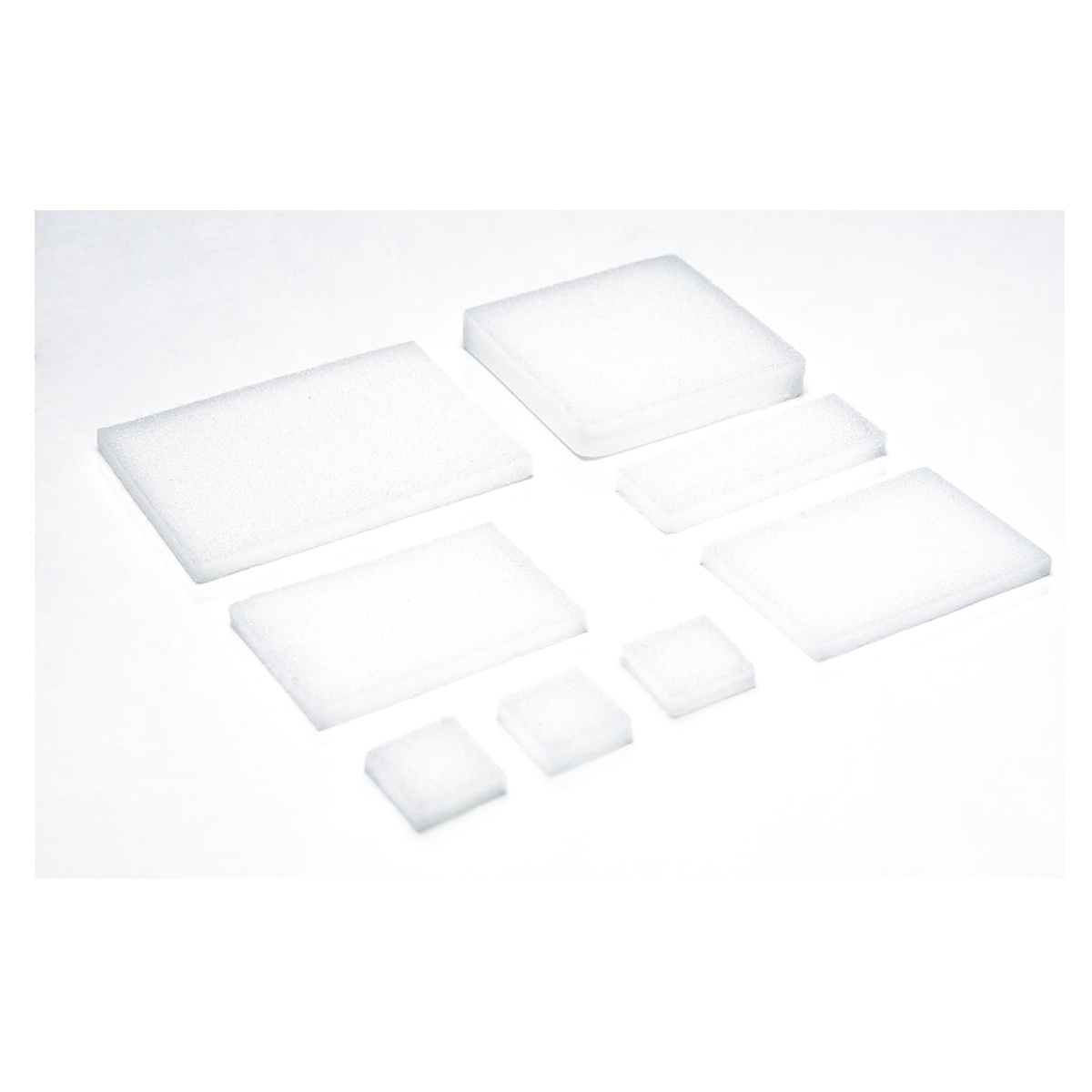
Absorbable Gelatin Sponge
- Material: absorbable gelatin
- Sizes: 4 (A, B, C, D)
- Pack: 1, 2 or 6 pieces
- Absorption: 2 - 4 weeks
- Product description: Sterile absorbable dental gelatin sponge for control of bleeding after extraction, in four sizes from 20 x 20 x 5 mm to 80 x 60 x 5 mm, supplied in individual packs.
Bleeding after an extraction is usually controlled by pressure and a suture, and in most cases that is enough. The cases that are not enough are the ones where the patient is on an anticoagulant, where the socket is large, where there is a bleeding disorder, or where the owner cannot be relied on to keep pressure on the site at home. That is where an absorbable haemostatic sponge earns its place in the drawer.
This is an absorbable gelatin sponge in four sizes, supplied sterile in individual packs. It is a porous gelatin matrix: placed dry in a socket it absorbs blood, expands, and provides a scaffold on which the clot forms and holds. It is absorbed over two to four weeks as the socket granulates, so nothing has to be removed afterwards.
How to use it
Place the sponge dry, or wrung out in saline if the socket is already wet, and press it into the socket so that it contacts the bleeding surface on all sides. Then place a gauze over it and ask the patient to bite for a few minutes - the pressure is what starts the clot, the sponge is what keeps it there. Do not pack it in tightly: a socket packed hard bleeds more when the pack is disturbed, and a sponge compressed into a hard plug does not expand into the bleeding points.
Where it does not belong
An infected socket is not a place for a haemostatic sponge. The gelatin provides a matrix that bacteria will use, and a sponge placed into an infected site can convert a manageable dry socket into an abscess that has to be opened. Debride and treat the infection first. Nor is the sponge a substitute for achieving haemostasis before closure: it is an adjunct to a socket that is already clean and mostly dry, not a way of closing a socket that is still bleeding freely.
| Type | Size | Per pack | Per box |
|---|---|---|---|
| A | 60 x 20 x 5 mm | 2 pieces | 20 packs |
| B | 20 x 20 x 5 mm | 6 pieces | 20 packs |
| C | 60 x 60 x 10 mm | 1 piece | 10 packs |
| D | 80 x 60 x 5 mm | 1 piece | 10 packs |
Choosing the size
The small squares (type B) are for a single socket, and are the ones a practice gets through fastest. The long strip (type A) is for a socket that has been opened surgically or for a ridge that has been resected, where the bleeding surface is longer than it is deep. The large sheets (types C and D) are for a broad oozing surface rather than a socket - a palatal donor site, a biopsy bed, a flap that will not stop weeping. Cut the sponge with scissors over the tray, not over the socket, and keep the piece you cut to the size of the defect: a sponge that overlaps onto the flap edge becomes a foreign body at the suture line.
Storage
Keep the packs dry and at room temperature. A sponge that has absorbed moisture from the air does not expand properly when it is placed, and the failure looks like a product that does not work rather than a pack that was stored in a humid drawer.
Related Products
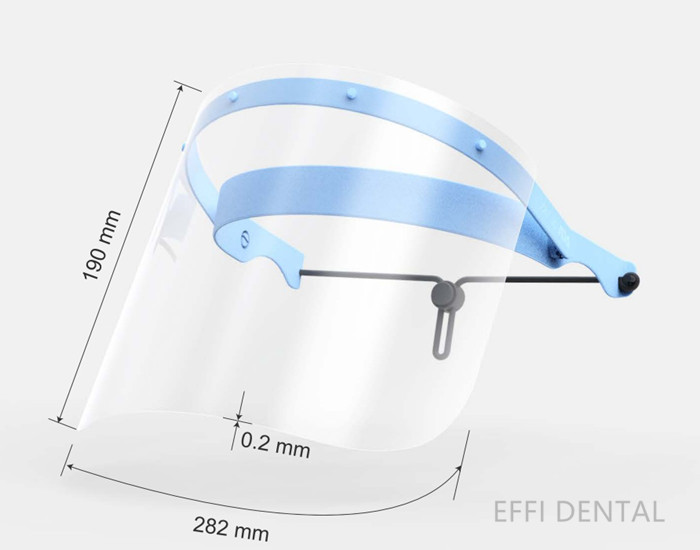


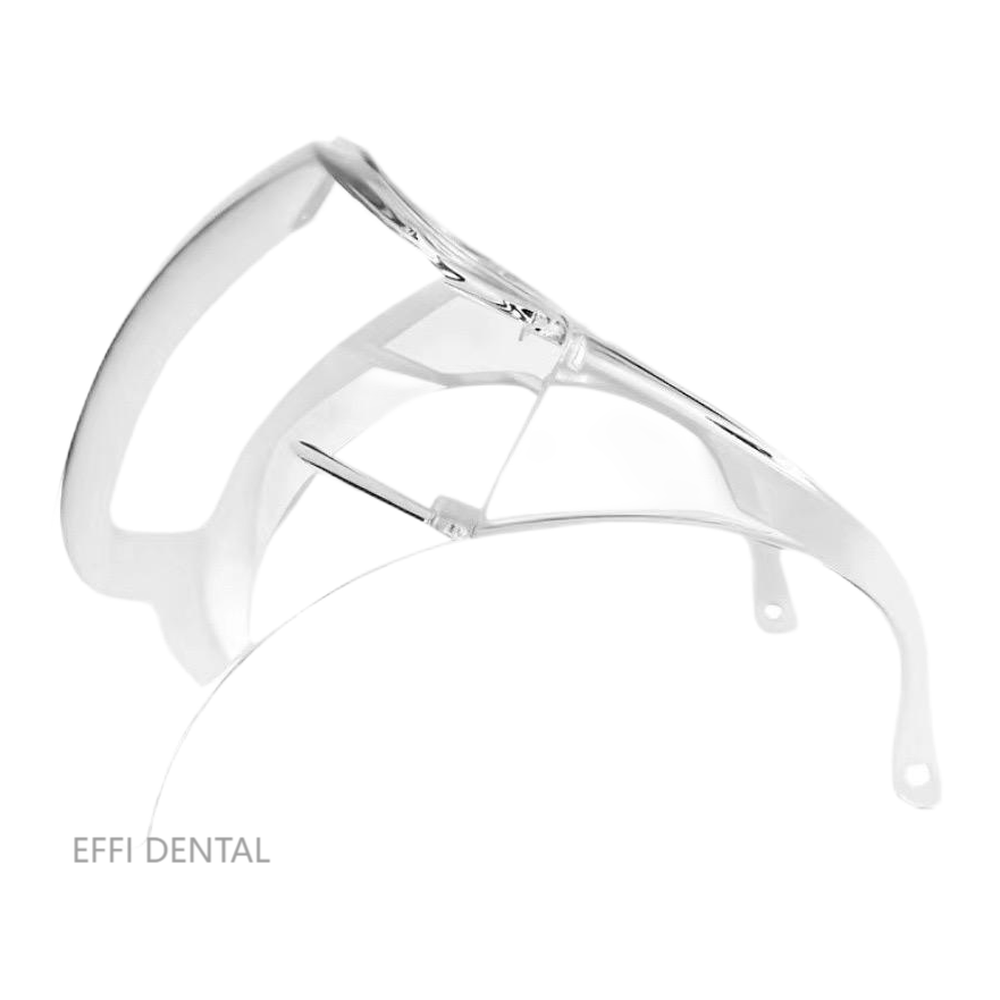
Wrap around face shield giving 180 degree coverage, worn with or witho
Categories
- Endodontics
- Burs, Polishers & Abrasives
- Handpieces & Motors
- Restorative & Prosthodontics
- Imaging & Digital Dentistry
- Orthodontics
- Unit Parts & Accessories
- Dental Instruments
- Implant & Biomaterials
- Preventive & Whitening
- Infection Control & Disposables
- Dental Lab & Materials
- dental equipment
- Loupes & Accessories
Latest News
Contact Us
Contact: Mario
Phone: +8613482534556
Tel: +86-574-62913789
Add: No.33 West Road, Gaoqiao Town, Ningbo, Zhejiang, China