


Vet Electrosurgery & Energy
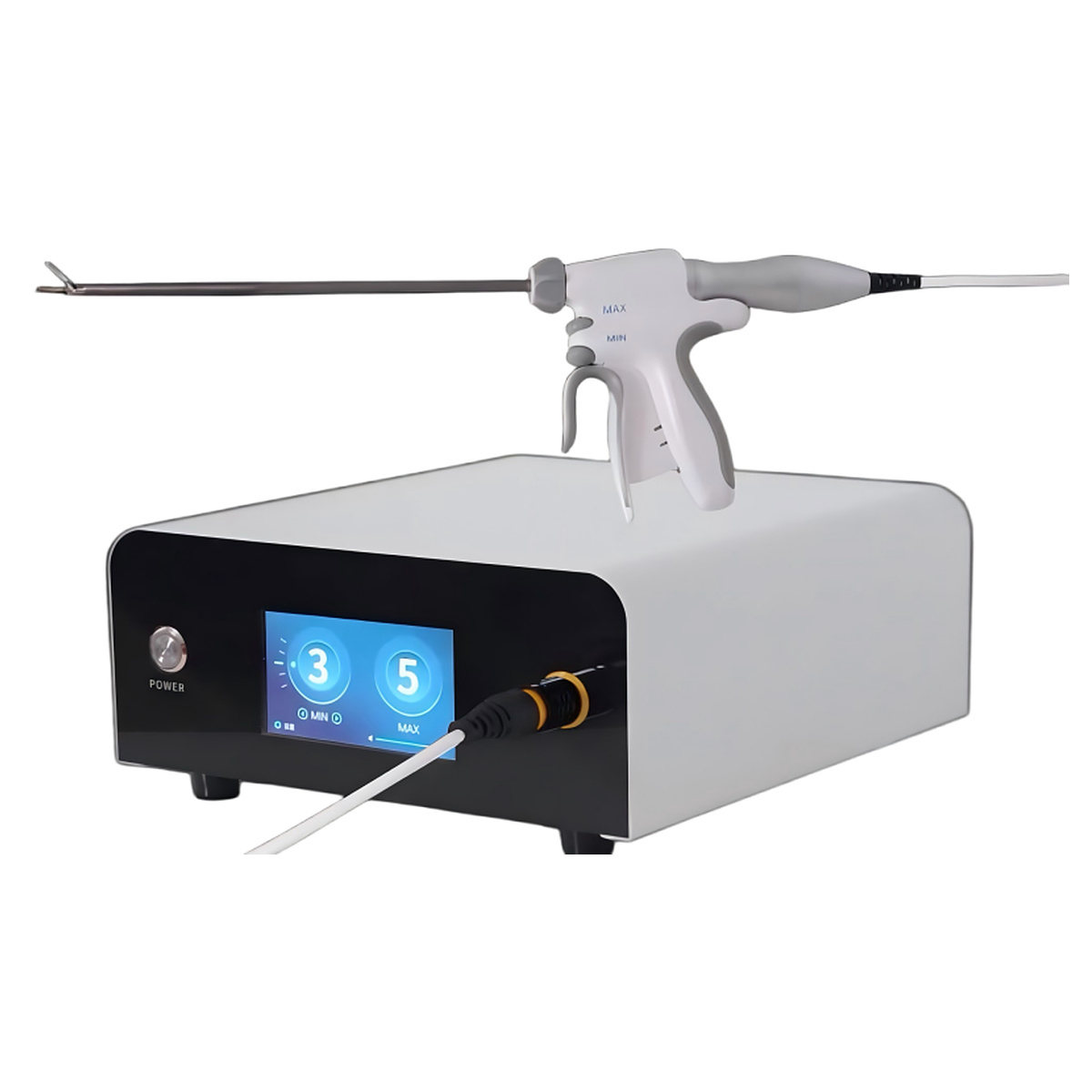
Veterinary Electrosurgery Unit
- Outputs: 2, independently adjustable
- Display: colour touchscreen, MIN-MAX scale
- Handpiece: pistol grip, ratchet, rotating shaft
- Cable: detachable, console-end connector
- Product description: Veterinary electrosurgical console with touchscreen and two independent outputs, supplied with a ratcheted sealing handpiece and detachable cable. For open and laparoscopic soft tissue surgery.
Electrosurgery in small animal practice is mostly about haemostasis in places a ligature will not reach: the ovarian pedicle in a cat, the bleeding edge of a splenic mass, the gingival margin after an extraction. The generator has to deliver enough current to seal a vessel without charring the tissue next to it, and it has to do that with a handpiece a surgeon can hold for a hysterectomy without their forearm cramping.
This is a console and handpiece set built around those two requirements. The console runs from a touchscreen with the active setting on the left and the second output on the right, each with its own MIN to MAX scale, so the two can be set independently instead of one being read off the other. The handpiece is a pistol grip with a ratcheted jaw, a rotation collar for orienting the jaw in the abdomen, and a MAX/MIN indicator on the handle body so the surgeon can see which setting is live without looking away from the field.
Two outputs, set separately
Most veterinary work needs two different effects on the same case: a cutting or blended current to open, and a coagulating current to stop. With independent channels the cut setting stays where it was dialled and the coagulation setting is available on the other output, so switching is a cable change rather than a dial change. The screen shows both scales at once, which matters when an assistant is running the box.
The handpiece
The jaw compresses tissue, delivers current through it and then cuts between two rows of a seal - the pattern used for pedicles, mesentery and the renal hilus. The rotation collar turns the jaw without twisting the cable. The ratchet holds compression between the surgeon's squeeze and the delivery of energy, so the seal is made under pressure rather than under whatever grip strength the hand happened to have at that moment. The cable detaches at the console end for storage and replacement.
What it does not replace
Energy devices seal vessels up to a stated diameter; above that a ligature or a stapler is the correct choice. If a pedicle is too large for the jaw to close on comfortably, do not force it - the tissue that squeezes out of the jaw is the tissue that bleeds later. Nor is a sealing device safe on a structure you have not identified: the thermal spread is real and invisible.
| Parameter | Value |
|---|---|
| Configuration | Console with touchscreen, two independent outputs |
| Display | Colour touchscreen, MIN-MAX scale per output |
| Handpiece | Pistol grip, ratcheted jaw, rotating shaft, MAX/MIN indicator |
| Connection | Detachable cable, console-end connector |
| Power supply | Mains, voltage confirmed per destination |
| Application | Soft tissue surgery, open and laparoscopic, canine and feline |
Setting it up
Place the console on a shelf away from the wet zone, with the cable loose enough that it does not tug on the handpiece when the surgeon steps back. Test the handpiece on discarded tissue before the first pedicle: a jaw that is not closing squarely seals on one side and not the other. Wipe the jaw with damp gauze between applications - charred tissue insulates it, and an insulated jaw delivers less energy at the same setting, which is how a device that worked at the start of a case stops sealing at the end of it.
Buying
Console, handpiece and cable are quoted as a set; the handpiece is available separately as a spare. Tell us whether you need a second output for a second handpiece and we will confirm configuration and mains voltage for your country before the order is placed.
Related Products
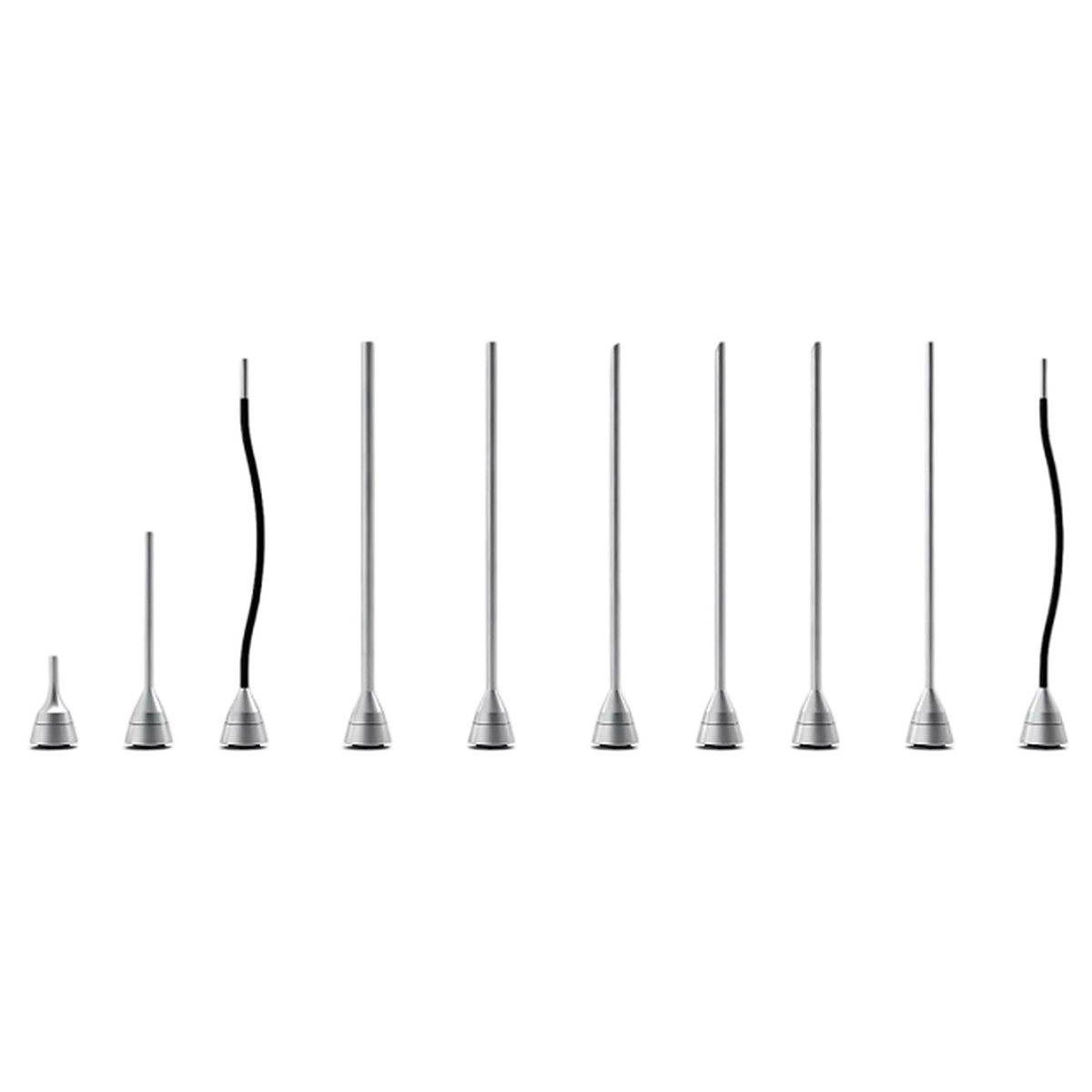
Electrosurgical Electrode Tips
Set of ten disposable electrosurgical needle electrodes in assorted le
Categories
Latest News
Contact Us
Contact: Mario
Phone: +8613482534556
Tel: +86-574-62913789
Add: No.33 West Road, Gaoqiao Town, Ningbo, Zhejiang, China