


Burs, Polishers & Abrasives
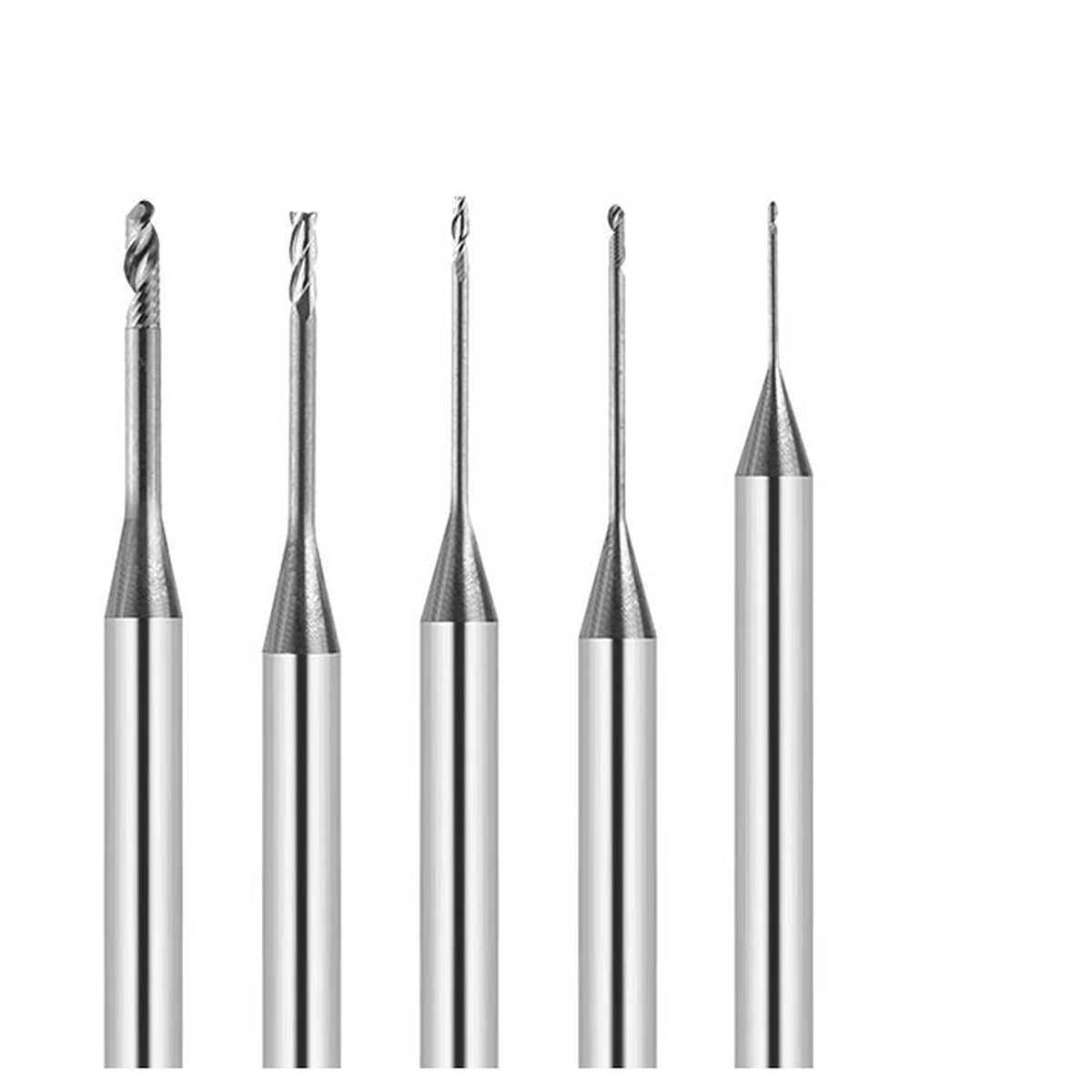
PMMA Milling Burs for Roland DWX-51D, 52D and 53D
- Machine: Roland DWX-51D / 52D / 52DC / 53D / 53DC
- Shank: 4 mm | Overall length: 50 mm
- Flutes: Ø2.0 / Ø1.0 / Ø0.6, ball and flat end
- Effective length: 16 mm and 8 mm | Packed in tubes
- Product description: PMMA milling burs for Roland DWX-51D / 52D / 52DC / 53D / 53DC, 4 mm shank, 50 mm overall, ball and flat end. Cross-referenced to ZPB-100D, ZPB-50D, ZPB-30D.
PMMA is not a soft material in the way people assume. It cuts cleanly at the right feed and then melts onto the flute at the wrong one, and the difference between a usable temporary and a gummy one is usually the bur, not the machine.
These fit the same dry-milling Roland range as the zirconia line — DWX-51D, 52D, 52D Plus, 52DC, 52DCi, 52DCi Plus, 53D, 53DC — with a 4 mm shank and 50 mm overall length, so they load into the same changer without touching the collet.
Shapes and cross-reference
| Effective length | Flute Ø | End type | Cross-reference |
|---|---|---|---|
| 16 mm | Ø2.0 | Ball end | ZPB-100D |
| 16 mm | Ø2.0 | Flat end | ZPB-100D |
| 16 mm | Ø1.0 | Ball end | ZPB-50D |
| 16 mm | Ø1.0 | Flat end | ZPB-50D |
| 8 mm | Ø0.6 | Ball end | ZPB-30D |
The ball and flat versions of the same diameter are not interchangeable. Ball end cuts the anatomy — occlusal grooves, cusp slopes, the inside of a pontic — because it can sweep in three axes without leaving a step. Flat end is for the parts that have to be planar: the intaglio of a temporary, the seating surface, the reduction on a preparation die. Ordering only ball end and then trying to flatten a margin with it is where the wavy intaglio comes from.
The 8 mm Ø0.6 exists for detail the 16 mm cannot reach — embrasure cleanup, gingival trim on a long-span temporary, separating a printed model from its supports without scarring the surface.
Why the coating matters here
PMMA is abrasive in a different way to zirconia: it does not blunt the edge so much as load it. A coated flute sheds the swarf, keeps the rake angle open, and stays cool. An uncoated bur will cut the first few units acceptably and then start producing the torn, cloudy surface that needs hand polishing afterwards — which is time you did not budget for.
Temporaries and dentures are not the same job
A single temporary crown is a short run — the bur mostly needs to leave a smooth surface in one pass, and the 16 mm ball end does that. A full denture base is a long continuous cut through a thick block, and that is where cooling and chip clearance matter more than edge sharpness; the same bur works, but the feed rate should not. Running both jobs at the denture feed rate is the usual reason temporary margins come out rough.
Ordering
Supplied in protective tubes, single shapes or mixed sets. Because PMMA work is usually bursty — a denture week, then nothing — tell us whether you mill continuously or in batches and we will size the pack to that rather than to a standard carton. Cross-reference checking before dispatch is included: send the part numbers you currently use and we will confirm the match.
Related Products
Dental Micro Brush Applicators
Disposable dental micro brush applicators for bonding agents, etchants


Glass Ceramic Burs for CAD/CAM
Glass ceramic burs for milling and adjusting lithium disilicate and fe


Zirconia Diamond Polishing Dis
Zirconia diamond polishing discs and wheels in graded grits for pre-si
Categories
- Endodontics
- Burs, Polishers & Abrasives
- Handpieces & Motors
- Restorative & Prosthodontics
- Imaging & Digital Dentistry
- Orthodontics
- Unit Parts & Accessories
- Dental Instruments
- Implant & Biomaterials
- Preventive & Whitening
- Infection Control & Disposables
- Dental Lab & Materials
- dental equipment
- Loupes & Accessories
Latest News
Contact Us
Contact: Mario
Phone: +8613482534556
Tel: +86-574-62913789
Add: No.33 West Road, Gaoqiao Town, Ningbo, Zhejiang, China