


Dental Lab & Materials
Lithium Disilicate Press Ingots - HT, LT and MO Translucency
- Lithium disilicate (pressable)
- HT / LT / MO - 23 shades
- D13 x 10 mm, 10 pcs/box
- 460 MPa biaxial strength
- Product description: Pressable lithium disilicate ingots in HT, LT and MO translucency, 23 shade groups, D13 x 10 mm, 10 ingots per box, 460 MPa average biaxial strength for veneers, inlays, onlays and single crowns.
Lithium disilicate press ingots for the lost-wax pressing technique, supplied in three translucency levels and a 23-shade shade range. Each ingot is D13 mm x 10 mm and presses into veneers, inlays, onlays and single-unit crowns. Average biaxial flexural strength of the pressed ceramic is 460 MPa, measured against the ISO 6872:2008 minimum of 300 MPa for dental ceramics.
Press ingots are the right choice when a restoration has to be built by hand: a thin ultra-translucent veneer, an inlay with a tight proximal contact, or a single crown on a prepared tooth where a milled block would waste material. The lab waxes, invests, burns out and presses - the ingot becomes the restoration, with no adhesive cementation to a substructure.
Three translucency levels
- HT - high translucency, for ultra-thin veneers, thin veneers and the enamel layer of anterior work
- LT - low translucency, the workhorse for inlays, onlays and single crowns where the tooth stump shade should be masked
- MO - medium opacity with a small pigment reaction layer, for cases needing a brighter base under a translucent veneer layer
HT and LT are stocked in 23 shades including the bleach and OM groups, so a stump-shade match does not force a switch of material. MO is supplied in MO-0 to MO-3 for the high-value cases where opacity has to be controlled separately from shade.
Recommended indications
| Indication | Suggested type | Typical use |
|---|---|---|
| Ultra-thin veneer | HT | 0.3 - 0.5 mm, no preparation or minimal |
| Veneer | HT / LT | Anterior aesthetic cases |
| Inlay | LT | Posterior, bounded by enamel |
| Onlay | LT | Cusp coverage, posterior |
| Anterior crown | HT / LT | Single unit |
| Posterior crown | LT / MO | Single unit, molar and premolar |
Pressing parameters
| Parameter | HT | LT |
|---|---|---|
| Embedding circle | 100 g | 100 g |
| Starting temperature | 700 °C | 700 °C |
| Heating rate | 60 °C / min | 60 °C / min |
| Maximum temperature | 905 °C | 910 °C |
| Holding time | 15 min | 15 min |
| Vacuum start | 700 °C | 700 °C |
| Vacuum end | 905 °C | 910 °C |
These are the values published by the manufacturer for this ingot. If your press furnace runs a different program for another pressable ceramic, start from these numbers and verify with a test press before committing a full arch - the maximum temperature and the vacuum release point are what decide whether the margin fills.
Where the material stops
- Single-unit restorations are the intended use. Three-unit bridges and anything spanning an edentulous space need a different material - use a zirconia or a lithium disilicate block designed for bridges.
- Pressed units still need the manufacturer's crystallization firing after divesting; the ingot does not arrive fully crystallized.
- Ultra-thin veneers depend on the bonding protocol as much as on the ingot. Do not press below the minimum wall thickness your cement and try-in sequence can support.
- Shade is a shade-tab match, not a spectrophotometer guarantee. Confirm the stump shade before choosing HT over LT on an anterior case.
Packing
D13 x 10 mm, 10 ingots per box, one shade and one translucency level per box. Mixed shade boxes are available on request; tell us the shade list and we will confirm availability before you order.
If you are switching from a milled lithium disilicate workflow, order one box of LT in your three most-used shades first. Pressing changes the way you plan the margin and the connector, and one box is enough to see whether the furnace program and the investment you already use will carry it.
Related Products
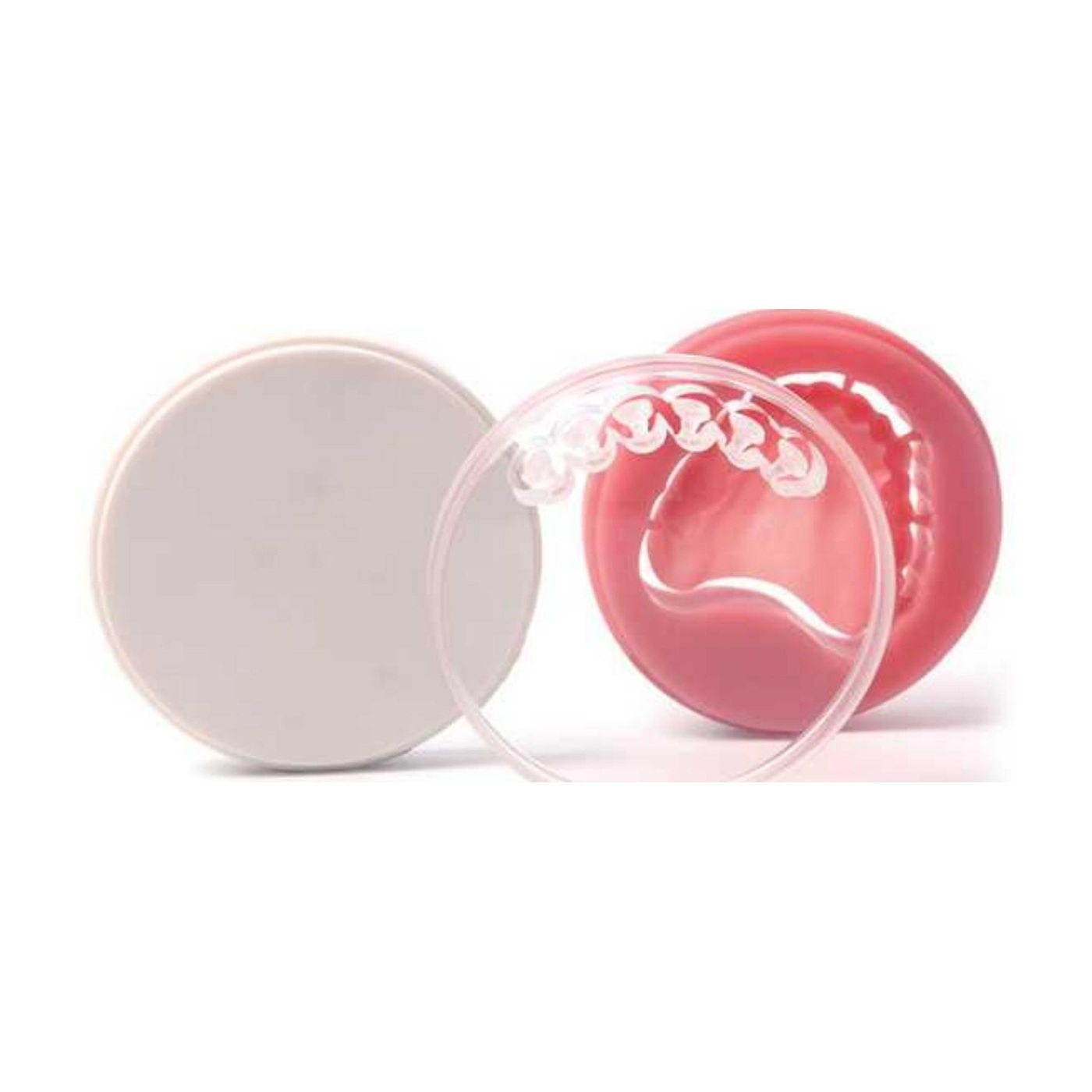
PMMA discs in monolayer, bilayer, multilayer and flexible versions. 98


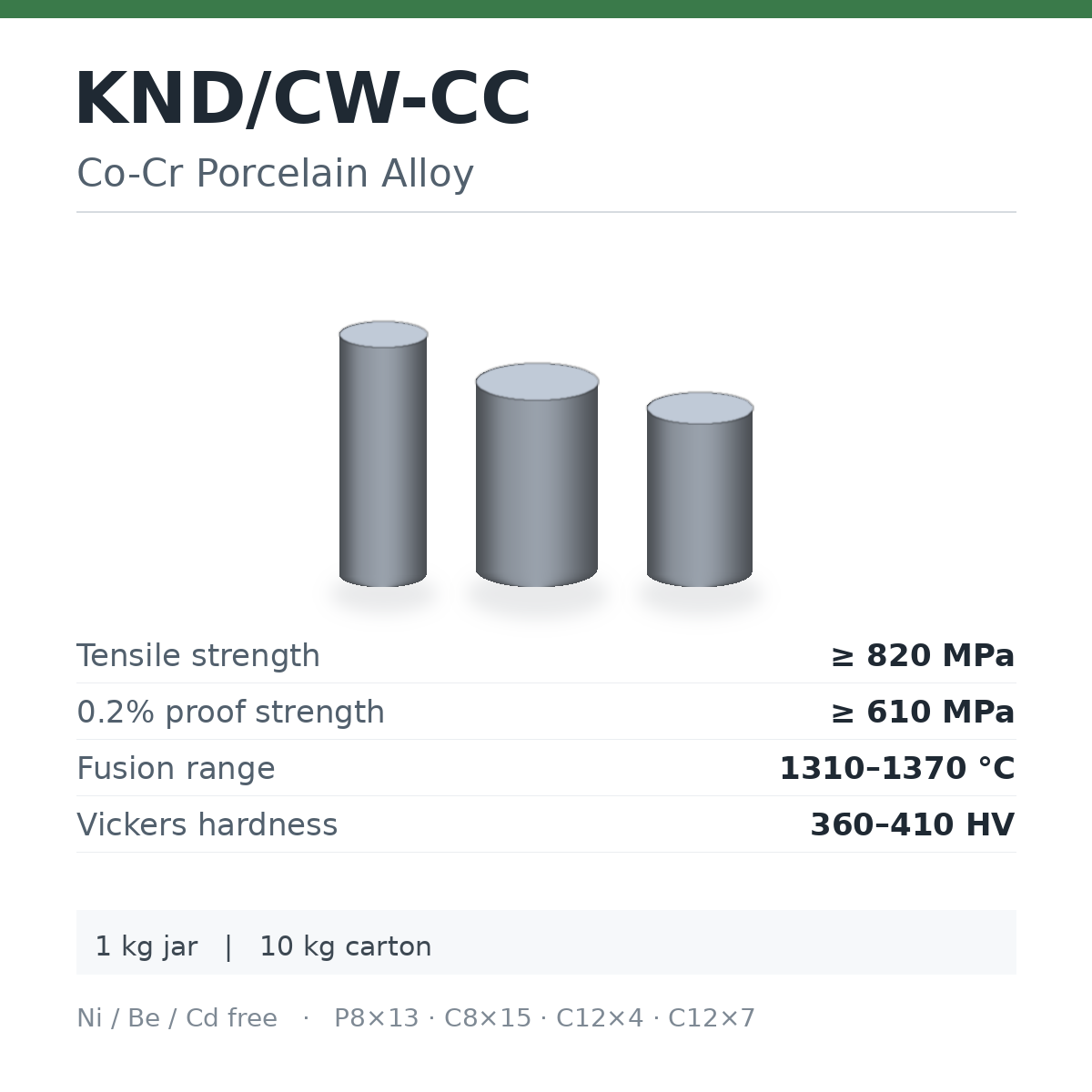
Vacuum-melted Co-Cr and Ni-Cr dental casting alloys in 1 kg jars, five

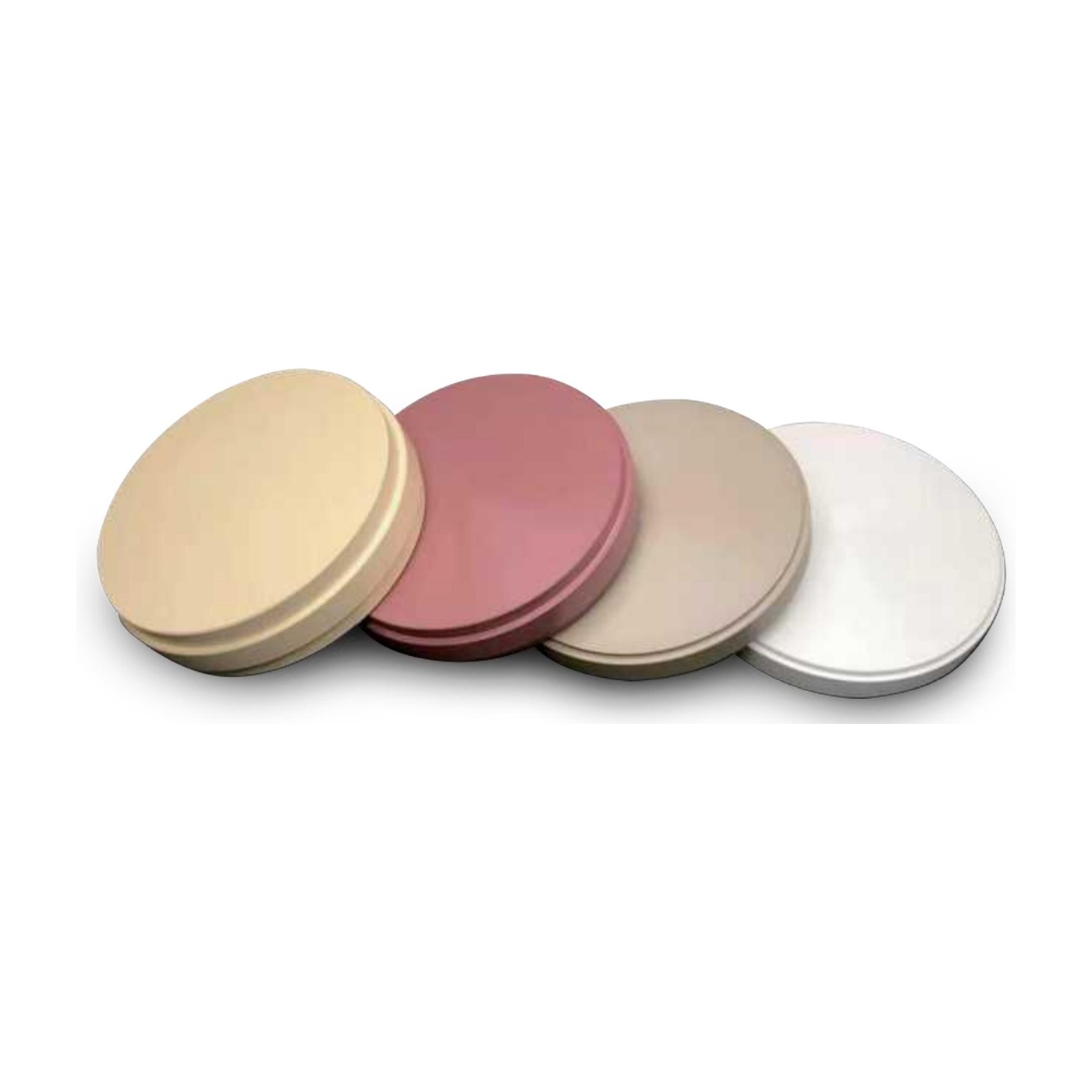
PEEK Disc for Dental CAD/CAM -
PEEK discs for CAD/CAM frameworks, temporary bridges and implant super
Categories
Latest News
Contact Us
Contact: Mario
Phone: +8613482534556
Tel: +86-574-62913789
Add: No.33 West Road, Gaoqiao Town, Ningbo, Zhejiang, China