


Burs, Polishers & Abrasives
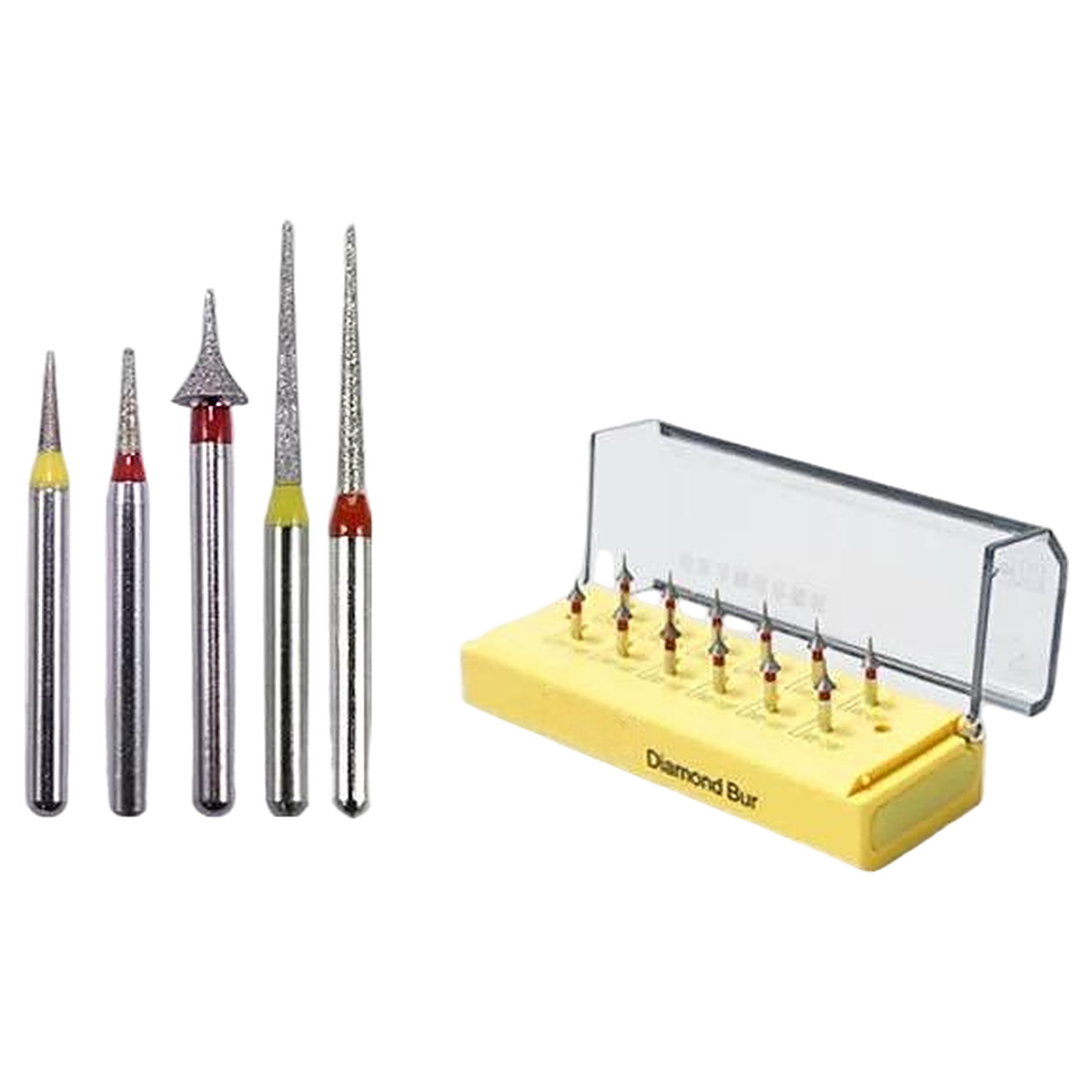
Diamond Burs FG - Fine & Very Fine Grit
- Grit: fine (red) / very fine (yellow)
- Shank: FG 1.6 mm friction grip
- Shapes: 5 assorted
- Packing: 10 pcs / box
- Product description: FG shank diamond burs in fine and very fine grit, five shapes per box of ten. For enamel contouring, crown margin refinement and composite finishing. Autoclavable, colour banded by grit.
A diamond bur is not a faster tungsten carbide bur. It removes material by grinding rather than by cutting flutes, so it works at lower pressure, generates less torque reaction in the handpiece, and leaves an enamel or ceramic surface with shallower subsurface damage. That difference is what makes it the default for margin work and for any preparation where the finish line has to be read under magnification.
These are FG shank diamonds in fine and very fine grit, packed ten to a box across five shapes. The grit is banded on the shank: red for fine, yellow for very fine. A fine diamond shapes and defines; a very fine one refines and polishes the same surface without changing its contour. Working through that pair in sequence is usually faster than trying to finish with a single medium grit and then fighting the scratches.
Where each grit earns its place
Fine grit (red band) is the working grit for crown preparations, veneer shoulder placement, and the initial break of contacts on ceramic. It cuts predictably at controlled pressure and holds its shape long enough to keep a margin consistent across a full arch.
Very fine grit (yellow band) is a finishing grit. On enamel it removes the striations left by the fine bur; on lithium disilicate and zirconia it is used to adjust a margin or a contact point before polishing, provided the restoration is not already glazed in the area being touched. On composite it produces a surface that a polisher can bring up quickly instead of one that has to be cut back again.
The five shapes in the box
The assortment covers the shapes that come up most often in a crown and veneer workflow: a needle for proximal access and narrow embrasures, a round-end taper for shoulder and chamfer margins, an inverted cone for flat floors and occlusal reduction, a long needle for deep subgingival margins, and a fine taper for general contouring. Shapes are banded and can be ordered as a mixed box or as single shapes in quantity.
| Parameter | Value |
|---|---|
| Grit | Fine (red band) / very fine (yellow band) |
| Shank | FG, 1.6 mm friction grip |
| Shapes | 5 assorted: needle, round-end taper, inverted cone, long needle, fine taper |
| Packing | 10 pcs per box, mixed shapes |
| Sterilisation | Autoclave at 134 °C |
| Application | Enamel contouring, crown margins, ceramic and composite finishing |
Fitting and running
The shank is FG, 1.6 mm, and fits any standard friction-grip turbine. Seat the bur fully before running it: a diamond that is not home will wobble, and a wobbling diamond at high speed cuts an oval instead of a circle. Check for visible runout at low speed before opening the water, and keep the coolant on the tip throughout, because a dry diamond loads with debris and stops grinding.
Use light, intermittent pressure and let the grit work. Heavy pressure does not speed up a diamond; it heats the tooth, bends the shank and wears the bur out of shape. Rinse and brush debris out of the grit after each use, and sterilise by autoclave at 134 °C. Do not soak diamonds in cold disinfectant for long periods, and do not use ultrasonic cleaning baths that attack the plating.
Ordering
Boxes of ten pieces. Mixed shape boxes are standard; single-shape boxes and other grit combinations can be quoted on request. Tell us the shapes and grits you use most and we will build the box around that.
Related Products
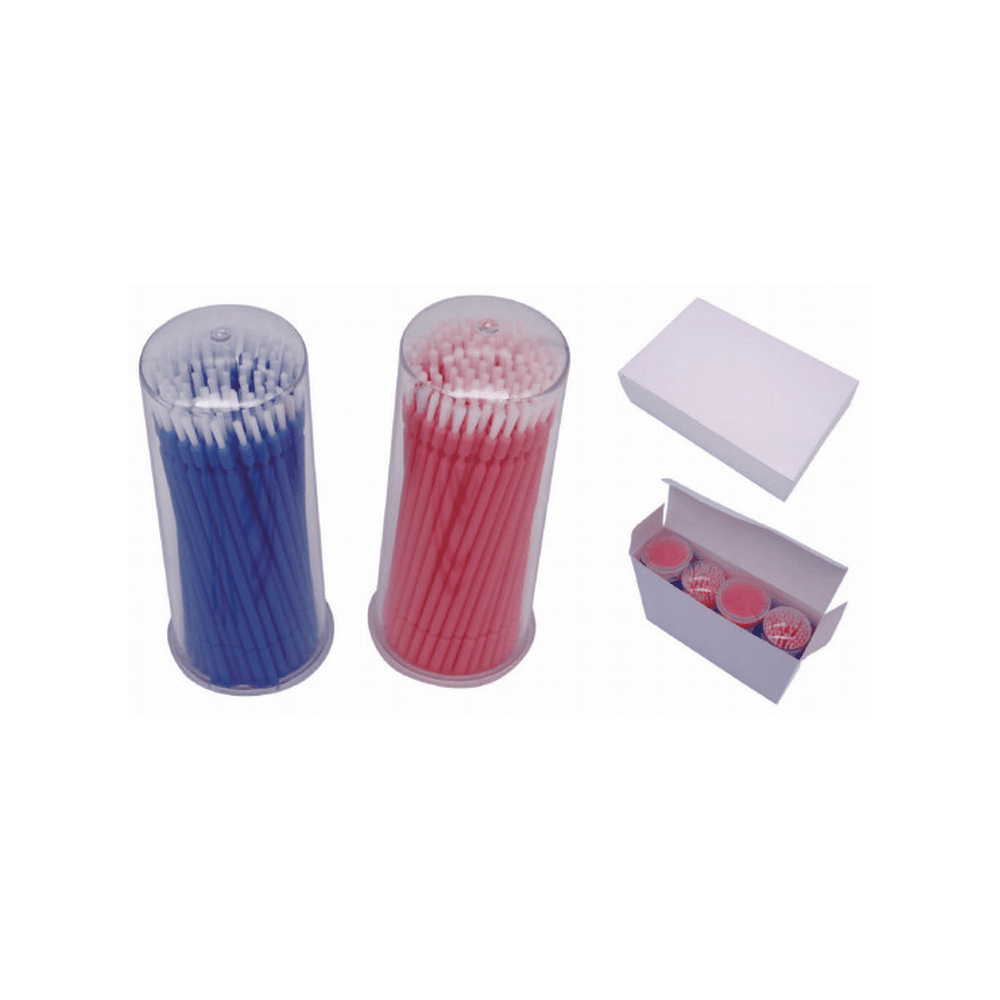
Dental Micro Brush Applicators
Disposable dental micro brush applicators for bonding agents, etchants


Glass Ceramic Burs for CAD/CAM
Glass ceramic burs for milling and adjusting lithium disilicate and fe


Zirconia Diamond Polishing Dis
Zirconia diamond polishing discs and wheels in graded grits for pre-si
Categories
- Endodontics
- Burs, Polishers & Abrasives
- Handpieces & Motors
- Restorative & Prosthodontics
- Imaging & Digital Dentistry
- Orthodontics
- Unit Parts & Accessories
- Dental Instruments
- Implant & Biomaterials
- Preventive & Whitening
- Infection Control & Disposables
- Dental Lab & Materials
- dental equipment
- Loupes & Accessories
Latest News
Contact Us
Contact: Mario
Phone: +8613482534556
Tel: +86-574-62913789
Add: No.33 West Road, Gaoqiao Town, Ningbo, Zhejiang, China