


Vet Prophylaxis & Scaling
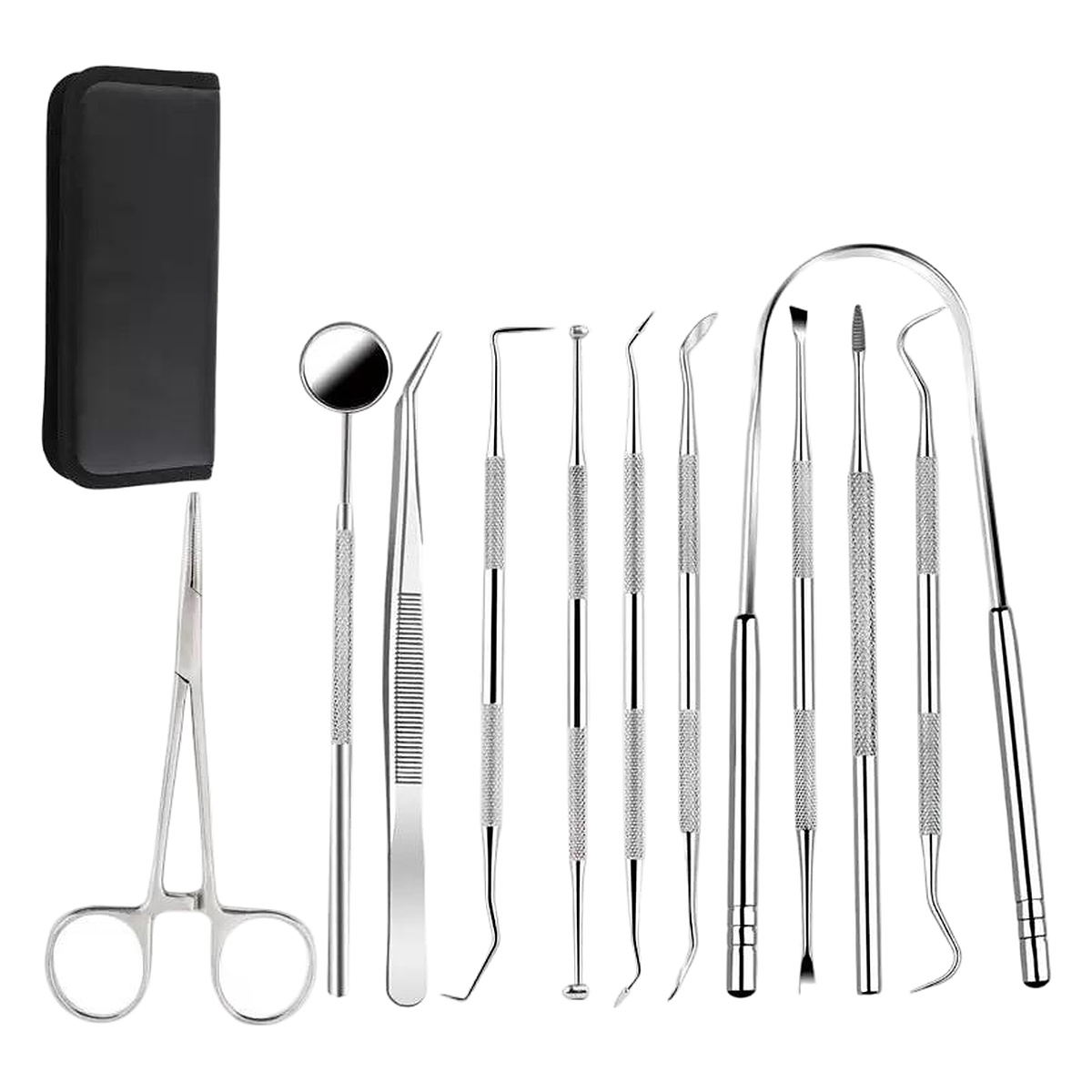
Dental Instrument Kit 13 pc
- Contents: 13 instruments + case
- Includes: mirror, probe, tweezers
- Scalers: 5 double-ended
- Sterilisation: autoclave 134 C
- Product description: Thirteen-piece stainless dental kit for dogs and cats: mirror, periodontal probe, college tweezers, five double-ended scalers and curettes, elevator, haemostatic forceps and case.
A dental kit for a veterinary practice is not a scaled-down human kit. The teeth are smaller, the mouth opens less far, the roots are curved and often ankylosed in an older dog, and the patient is under anaesthesia for the whole procedure with a tube in the way. What the kit has to do is let one person examine, scale and extract in a mouth they can only partly see into.
This is a thirteen-piece stainless set with a storage case: a mouth mirror, a periodontal probe, college tweezers, five double-ended scalers and curettes, two long-handled instruments, an elevator and a haemostatic forceps. Every handle is knurled, because a glove on a wet instrument is the reason things are dropped into a mouth.
The examination end
The mirror is small enough to get behind the last upper molar in a cat without levering the jaw open further than it wants to go, and the probe is the instrument that decides the treatment plan: a probe that sinks past the gingival margin on the distal of a lower carnassial is the finding that turns a scale and polish into an extraction. Probe every tooth, not just the ones that look dirty - the buccal surface is what the owner sees and the distal surface is what abscesses.
The scaling end
The double-ended scalers remove supragingival calculus; the curettes, with their rounded backs, are for subgingival work and for root planing without cutting the gingiva. The distinction matters: a sickle scaler pushed under the gum lacerates the attachment you are trying to preserve. Use the tip, adapt the cutting edge to the surface, and keep the shank parallel to the tooth rather than approaching at an angle.
The extraction end
The elevator is for breaking down the periodontal ligament, not for levering a tooth out in one movement. Small, controlled rotations with the tip between root and bone, working around the circumference, separate the tooth with far less risk of fracturing a root or the mandible. The haemostatic forceps is there for the bleeding that follows, and for retrieving a root tip from a socket.
| Parameter | Value |
|---|---|
| Contents | 13 instruments plus storage case |
| Includes | Mouth mirror, periodontal probe, college tweezers, 5 double-ended scalers/curettes, 2 long-handled instruments, elevator, haemostatic forceps |
| Material | Stainless steel, knurled handles |
| Sterilisation | Autoclave at 134 C; dry the case separately |
| Case | Rigid storage case with individual slots |
| Application | Examination, scaling, root planing and extraction, canine and feline |
Care that keeps an edge
Scalers are sharpened on the flat face, with the stone held flat against it - sharpening the bevel rounds the edge and the instrument stops cutting. Sharpen little and often rather than once a month, and test the edge on a plastic test stick, not on a fingernail. Instruments that have been through a ultrasonic bath with other steel will have their edges dulled by contact; keep the kit in its case through the cycle.
The case has slots for each instrument, which is not decoration: a scaler lying loose against a forceps in a tray is a scaler with a chipped tip.
Related Products
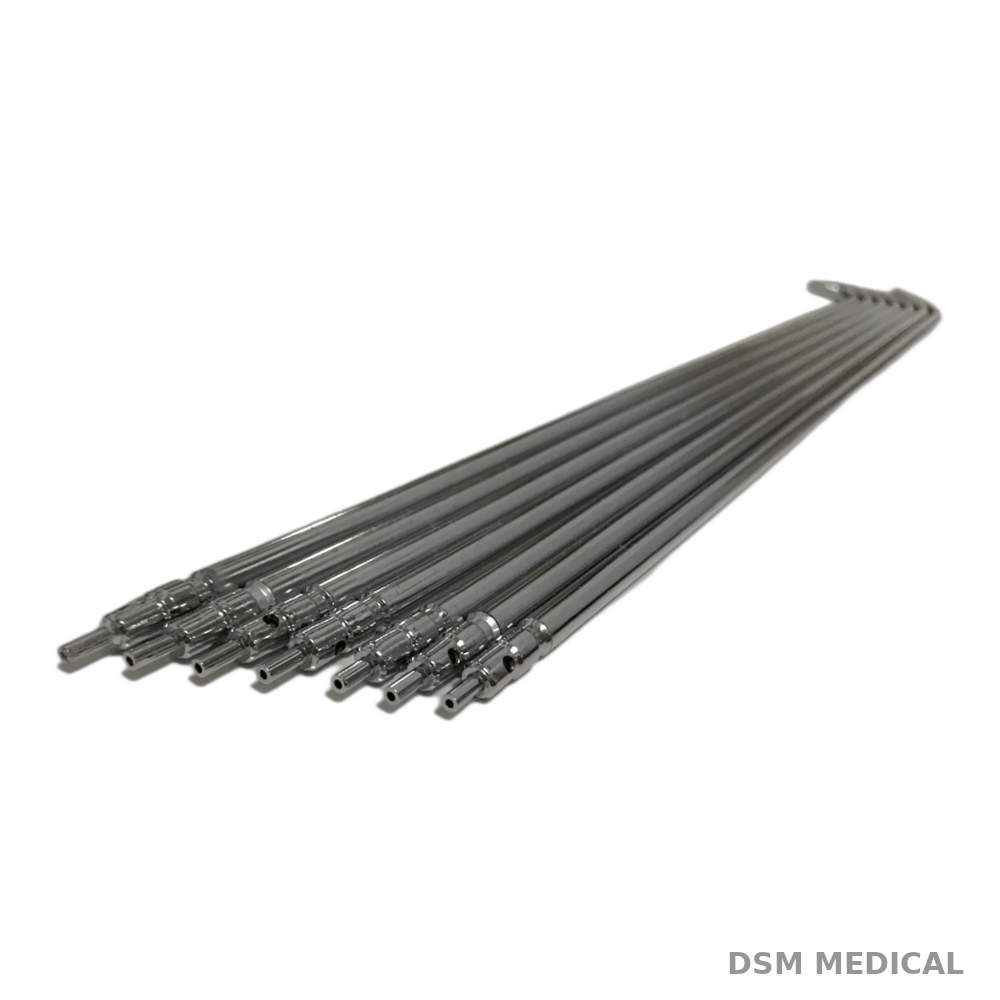
Long-reach stainless steel air-water syringe tips for equine dentistry
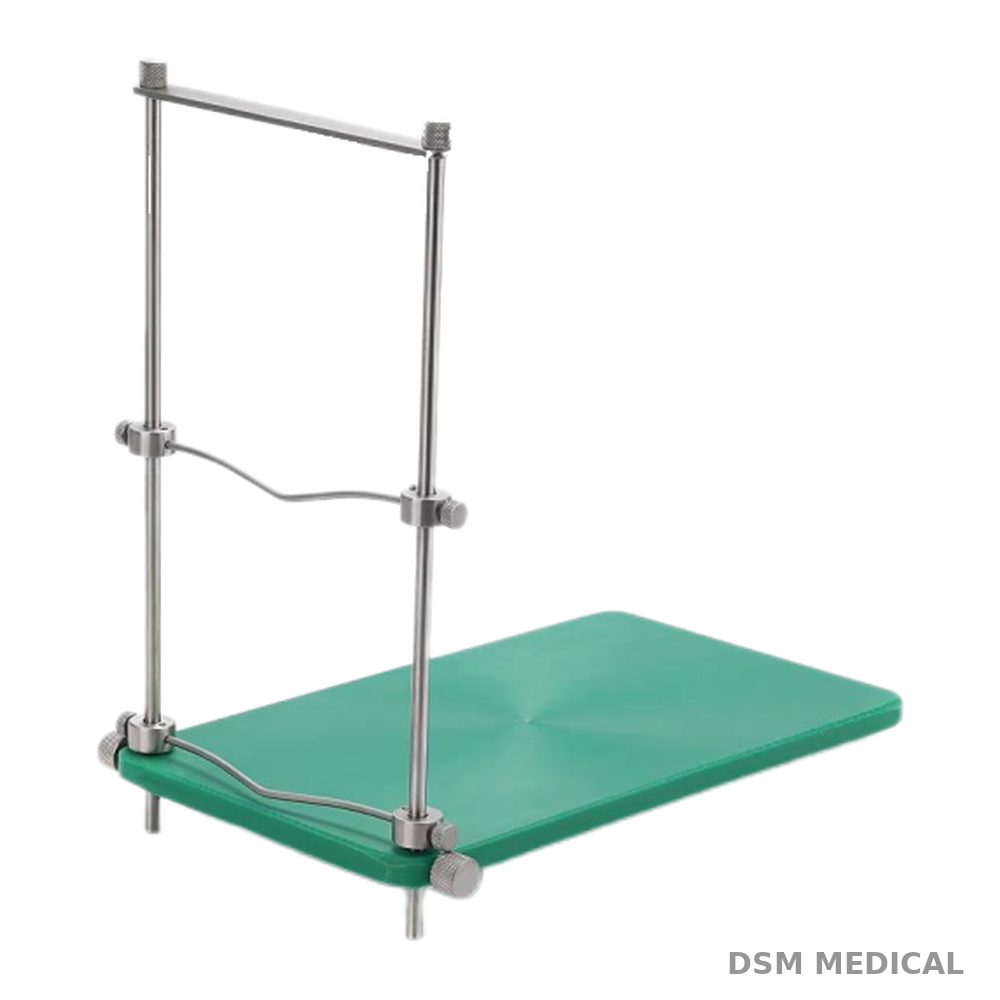
Table Top Mouth Gag for Rabbit
Table top mouth gag for rabbit, guinea pig, chinchilla and rat. Stainl
Categories
Latest News
Contact Us
Contact: Mario
Phone: +8613482534556
Tel: +86-574-62913789
Add: No.33 West Road, Gaoqiao Town, Ningbo, Zhejiang, China