


Infection Control & Disposables
Surgical Saliva Suction Tubes and Precision Suction Tips
- Tube sizes: 1.3 / 2.0 / 4.3 mm
- Precision tips: 1.2 / 2.5 mm
- Material: Medical grade, single use
- Adapter: Chair-side suction conversion
- Product description: Disposable saliva suction tubes in 1.3, 2.0 and 4.3 mm, weak suction tubes, precision suction tips in 1.2 and 2.5 mm and a suction tube adapter. Medical grade, single use.
Suction in implant and oral surgery is not about removing volume. It is about keeping a 4 mm field dry long enough to see the margin, without the tip pulling the flap or blocking on a blood clot every thirty seconds. A standard 6 mm ejector is too coarse for that; a fine tip that collapses under vacuum is worse than no tip at all.
This range covers the gap between the two: surgical tubes at 1.3, 2.0 and 4.3 mm, a weak suction tube for cases where full vacuum pulls tissue, fine precision tips at 1.2 and 2.5 mm, and an adapter that lets a standard chair-side hose take the surgical fittings.
| Item | Where it is used |
|---|---|
| Precision suction tip, 1.2 mm | Fine aspirator for narrow sites and sulcus work |
| Precision suction tip, 2.5 mm | General fine aspiration, small flap retraction |
| Surgical saliva suction tube, 1.3 mm | Implant osteotomy, limited access, paediatric |
| Surgical saliva suction tube, 2.0 mm | General oral surgery, extraction sockets |
| Surgical saliva suction tube, 4.3 mm | High volume, full-arch and flap surgery |
| Weak suction tube | Reduced vacuum for soft tissue and nerve-adjacent sites |
| Suction tube adapter | Converts chair-side hose to surgical tube fitting |
Choosing a size. Match the tube to the field, not to habit. A 1.3 mm tube clears a single osteotomy site and nothing else; on a full-arch case it blocks within minutes and the assistant spends the procedure clearing it. A 4.3 mm tube clears a whole quadrant, but on a small site the airflow it needs will pull the flap and desiccate the socket. Most surgical trays end up carrying two sizes for exactly this reason.
Why a weak suction tube exists. Full vacuum on a fine tip is enough to pull unattached mucosa into the lumen and hold it there. A weak tube runs at reduced vacuum so the tip stays open against soft tissue, which matters around the lingual nerve, in the floor of the mouth and in paediatric cases. It is a compromise, not a substitute for correct tip placement.
The adapter. Most chair-side hoses take a push-fit ejector; surgical tubes often use a different taper. The adapter sits between the two so a standard unit can run surgical tubes without changing the hose end. Two sizes are supplied in the range because hose bores differ between chair brands; check the hose diameter before ordering, since a loose adapter leaks air and the tube stops aspirating even though the pump is running.
Limits. These are single-use, medical grade disposables, supplied non-sterile unless the pack states otherwise, and they are not intended for autoclave. They are suction tubes: they do not filter the aerosol, they do not replace high-volume evacuation for droplet control, and the stated sizes are nominal bore, not the effective flow at the tip. Flow also depends on the pump, the hose length and how many lines are open at once.
Buy the sizes the cases actually use. A drawer with four sizes in it and no 2.0 mm is worse than three sizes that are always stocked, because the missing one gets substituted and the substitution is what slows the case down.
Related Products
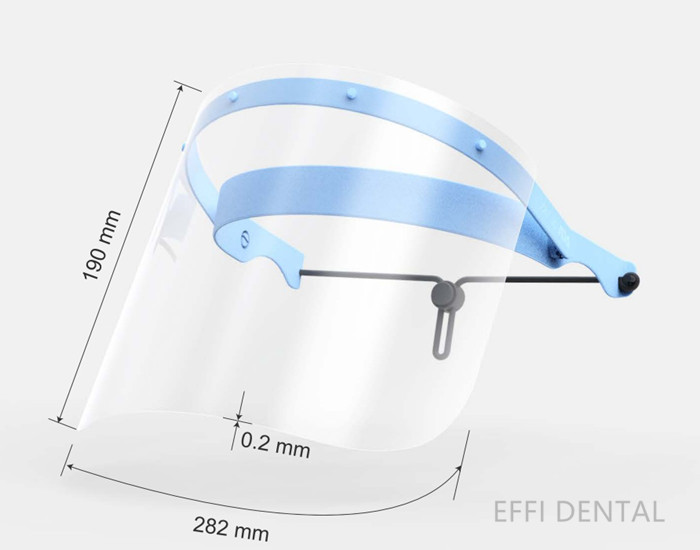


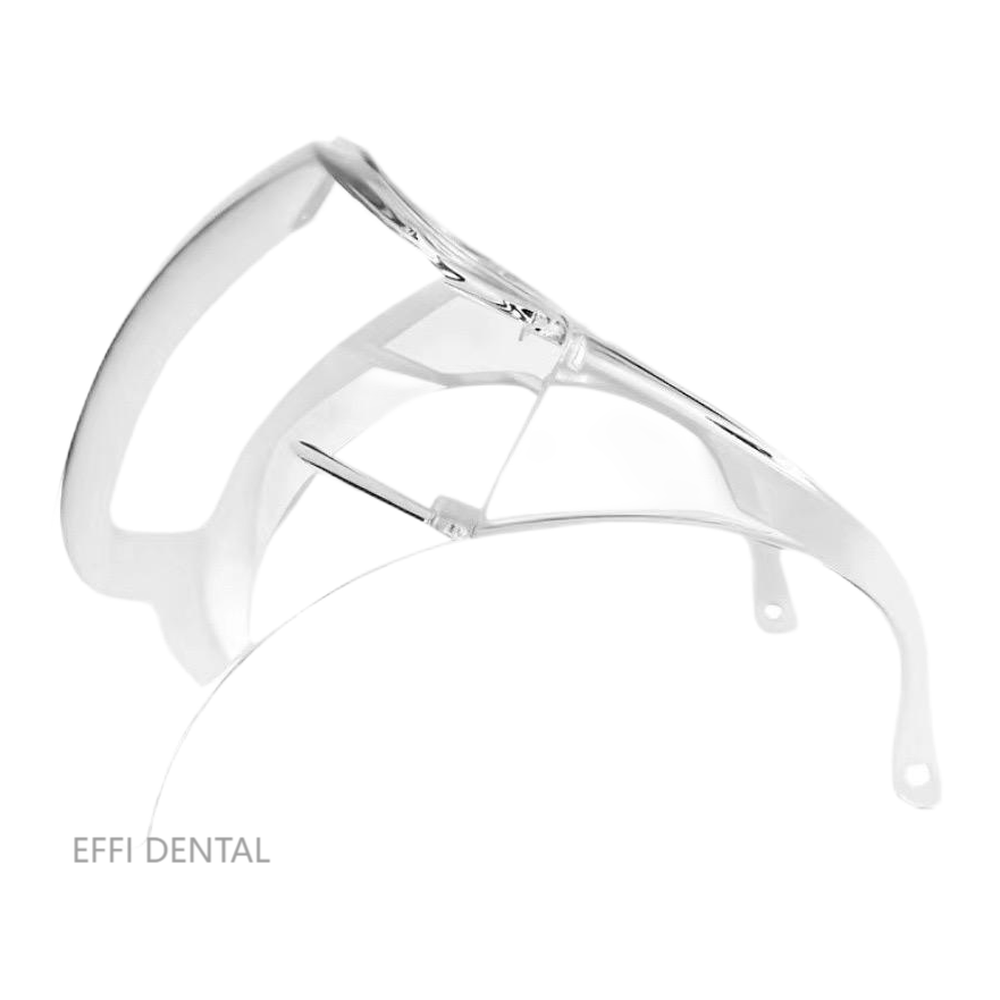
Wrap around face shield giving 180 degree coverage, worn with or witho
Categories
- Endodontics
- Burs, Polishers & Abrasives
- Handpieces & Motors
- Restorative & Prosthodontics
- Imaging & Digital Dentistry
- Orthodontics
- Unit Parts & Accessories
- Dental Instruments
- Implant & Biomaterials
- Preventive & Whitening
- Infection Control & Disposables
- Dental Lab & Materials
- dental equipment
- Loupes & Accessories
Latest News
Contact Us
Contact: Mario
Phone: +8613482534556
Tel: +86-574-62913789
Add: No.33 West Road, Gaoqiao Town, Ningbo, Zhejiang, China