


Obturation & Filling Materials
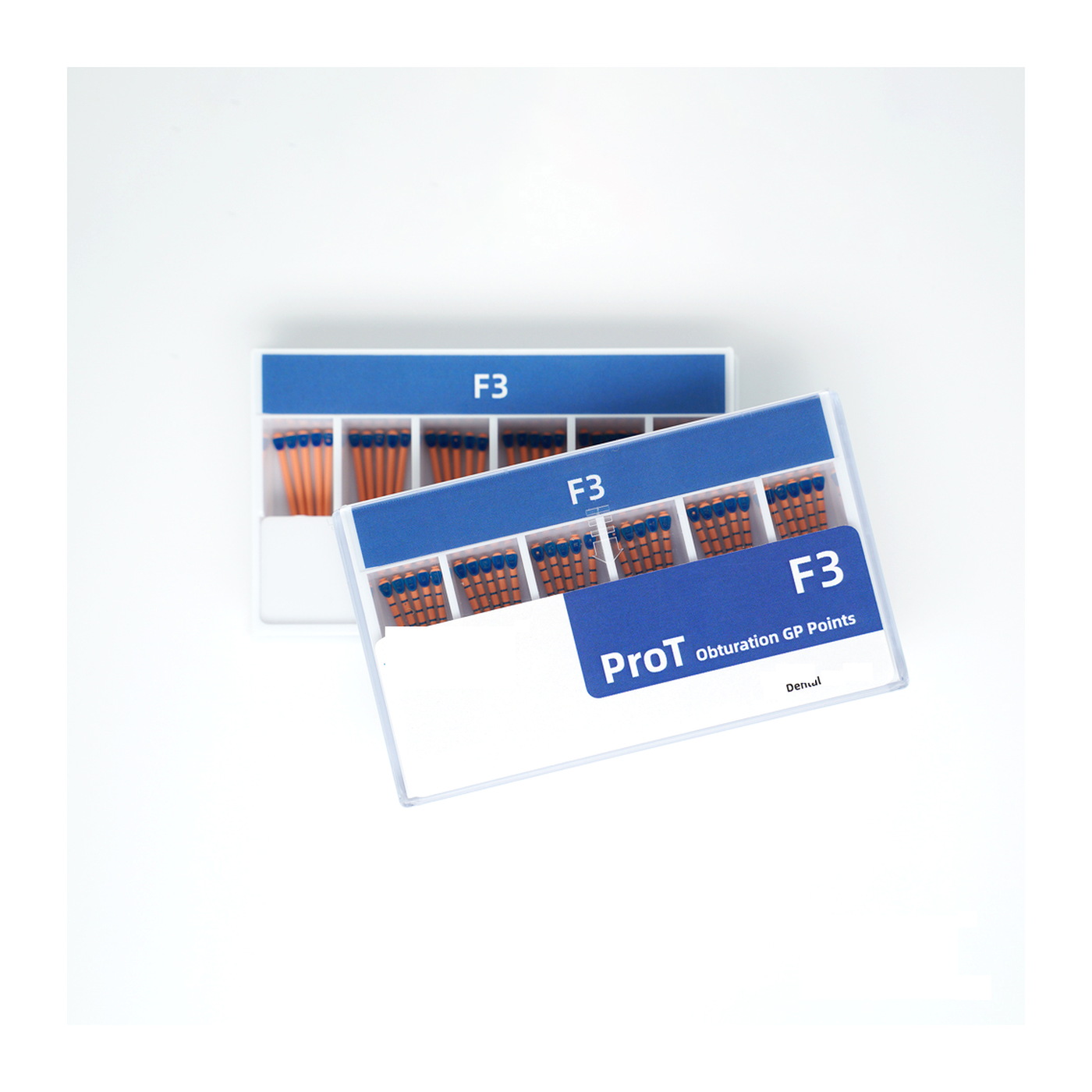
mm-Marked Gutta Percha Points - Special Taper (ProTaper, ProTaper Next, WaveOne Gold)
- Material: Gutta percha compound
- Taper: Matched to each file system
- Sizes: F1-F5, X2-X5, Small-Large
- Packing: 60 pcs per box, 28 mm
- Product description: Moulded gutta percha points with a printed mm scale, matched to ProTaper, ProTaper Next and WaveOne Gold. F1-F5, X2-X5, Small-Large, 28 mm, 60 per box.
Most gutta percha points on the market are still rolled by hand, one at a time, and the differences between the first point and the last in a box are the reason clinicians end up discarding half of them. These points are not rolled. They are moulded in a steel tool, which is why the taper is the same on point one and point sixty, and why a millimetre scale can be printed along the shaft and stay where it was printed.
The scale is the part clinicians notice first. Depth is read directly off the point instead of being estimated against a ruler on the tray, so the point goes in to the length you prepared and no further.
Three series, three file systems
| Series | Matched file systems | Sizes | Length | Packing |
|---|---|---|---|---|
| ProT | ProTaper, EdgeTaper, Dia-X | F1, F2, F3, F4, F5 | 28 mm | 60 pcs / box |
| ProT Next | ProTaper Next, EdgeTaper Encore | X2, X3, X4, X5 | 28 mm | 60 pcs / box |
| ProW Gold | WaveOne Gold, EdgeOne Fire, EdgeOne Platinum, ESR | Small, Primary, Medium, Large | 28 mm | 60 pcs / box |
Each box holds one size. There are no mixed boxes, because a mixed box is how a drawer ends up with four sizes nobody uses and one size that runs out on a Friday afternoon.
What changes in the hand
- The taper is uniform along the whole shaft. A hand-rolled point is thickest where the material was wrapped and thinnest where it was pulled, and that variation shows up as a loose apical third on the film.
- The tip is solid and smooth. Rolled points can show overlapping material at the tip, which reads as a short fill even when the cone was seated to length.
- The point holds its shape between the box and the canal. Moulded compound does not flatten in the drawer the way hand-rolled points do.
Where a moulded point is the wrong choice
A moulded point does not take a curve. If your technique needs the cone bent to follow a curved canal, or trimmed at the tip to fit a specific preparation, a hand-rolled point is the better tool - it can be reshaped, a moulded point cannot without losing the taper that makes it useful. We stock the standard 0.02 taper for that kind of work.
The series are also not interchangeable. ProT, ProT Next and ProW Gold follow three different shaping sequences and the tapers do not cross over. Order against the finishing file you actually use, not against the size number on the old box. If your technique is a hybrid - a 0.06 rotary shape finished with a hand file, for example - the point that fits is the one that matches the last instrument, not the first.
Other points in the range
For cold lateral condensation we supply standard 0.02 taper points in ISO sizes 15 to 80. For reciprocating systems there are separate listings for RECIPROC (R25 to R50) and for WaveOne Classic (X1 to X4) - the numbering looks similar to ProW Gold but the tapers are different and the boxes are not swappable. For 0.04 and 0.06 taper rotary shapes, see the 0.04 / 0.06 marked points.
Tell us which system your clinic runs and how many boxes a month you go through, and we will quote against that mix rather than against a full catalogue.
Related Products

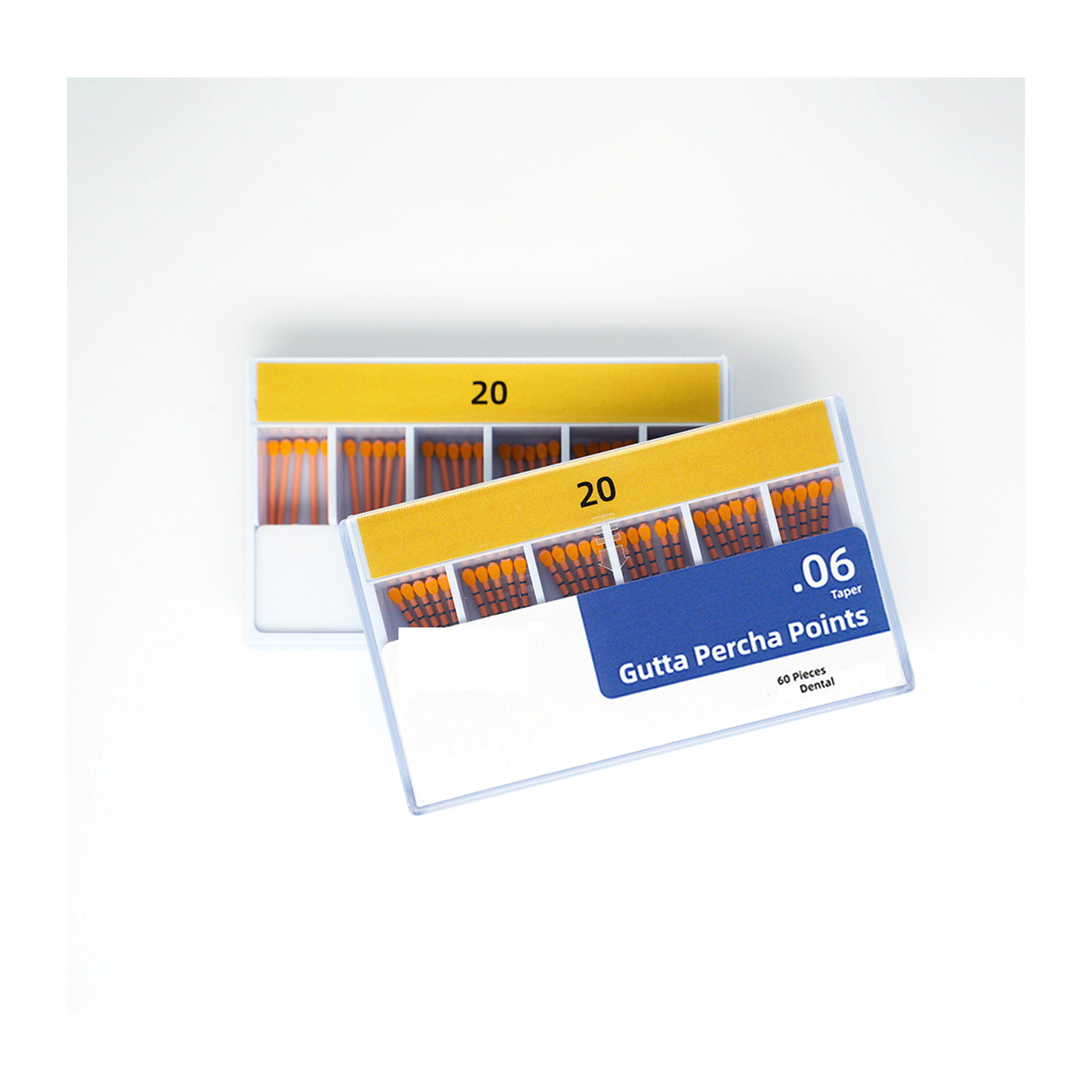
0.04 and 0.06 Taper Gutta Perc
Moulded gutta percha points in 0.04 and 0.06 taper, ISO sizes 15-40, w

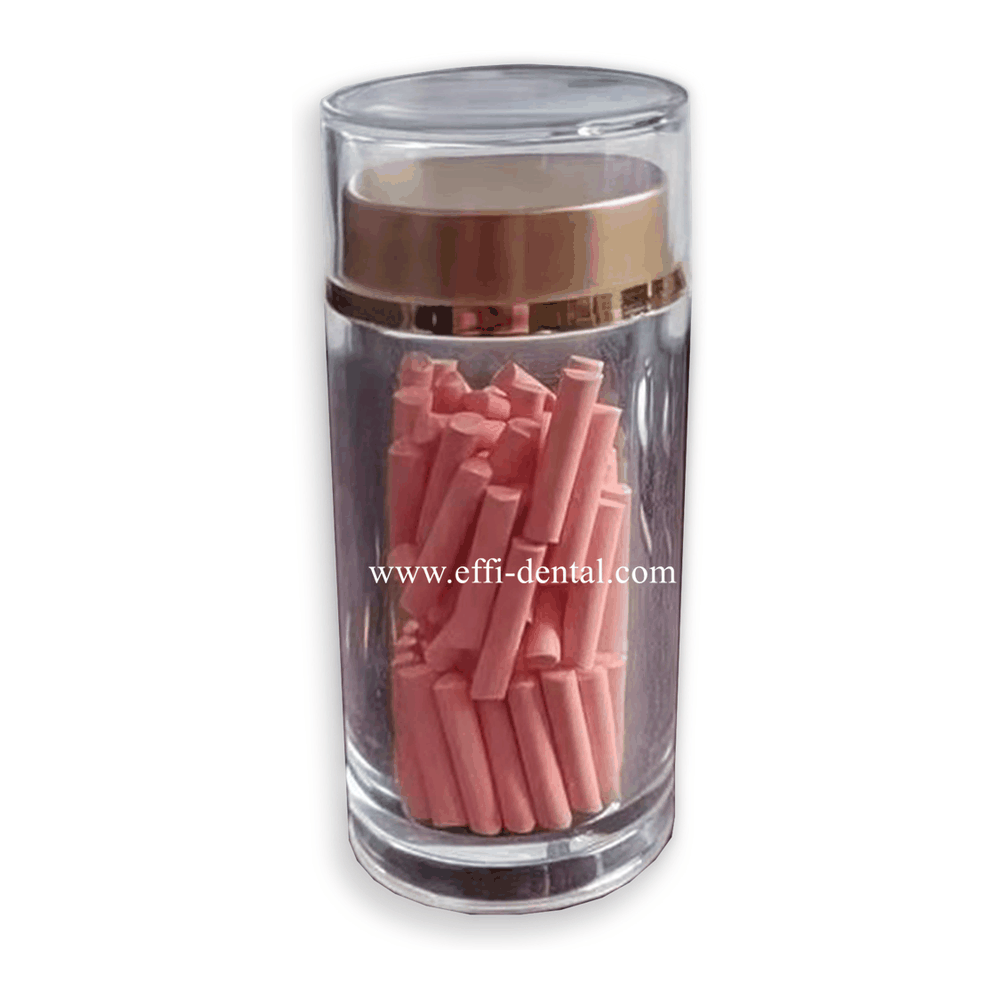
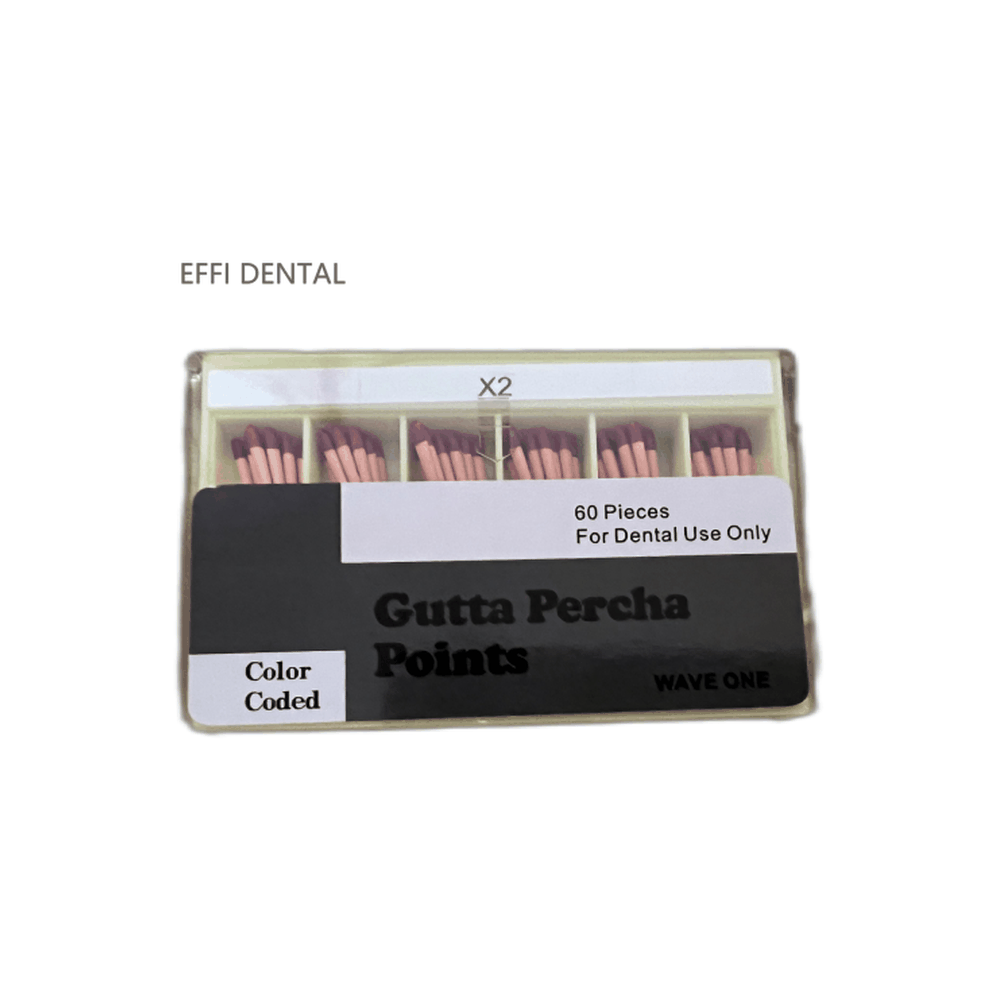
WaveOne Compatible Gutta Perch
Gutta percha points matched to the WaveOne reciprocating system, sizes

RECIPROC Compatible Gutta Perc
Gutta percha points for the VDW RECIPROC system, sizes R25 to R50. REC
Categories
- Endodontics
- Burs, Polishers & Abrasives
- Handpieces & Motors
- Restorative & Prosthodontics
- Imaging & Digital Dentistry
- Orthodontics
- Unit Parts & Accessories
- Dental Instruments
- Implant & Biomaterials
- Preventive & Whitening
- Infection Control & Disposables
- Dental Lab & Materials
- dental equipment
- Loupes & Accessories
Latest News
Contact Us
Contact: Mario
Phone: +8613482534556
Tel: +86-574-62913789
Add: No.33 West Road, Gaoqiao Town, Ningbo, Zhejiang, China